Labs
One lab per part. Each is seeded, runs in seconds with nothing to download, checks its own result against the theory it illustrates, and ends with three things to change. They are written on statkit and the World: the series' statistics library (numpy and scipy only), with the simulated World, the exact probability engine and the Museum's datasets beside it in explainer/stats.
pip install numpy scipy matplotlib
python -m videos.stats.labs --list
python -m videos.stats.labs 1 --show
python -m pytest -q tests/test_courses.py -k stats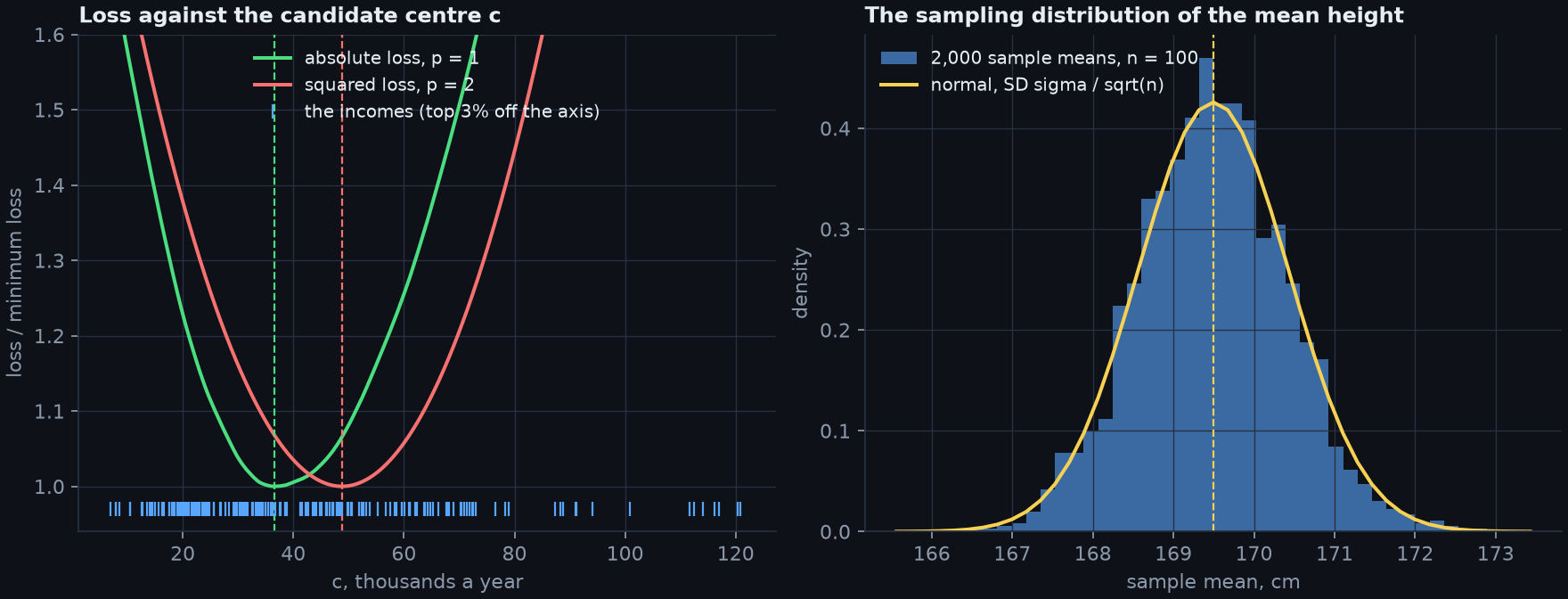 Lab 1 · The Shape of DataCentres as minimizers, and a statistic that is random
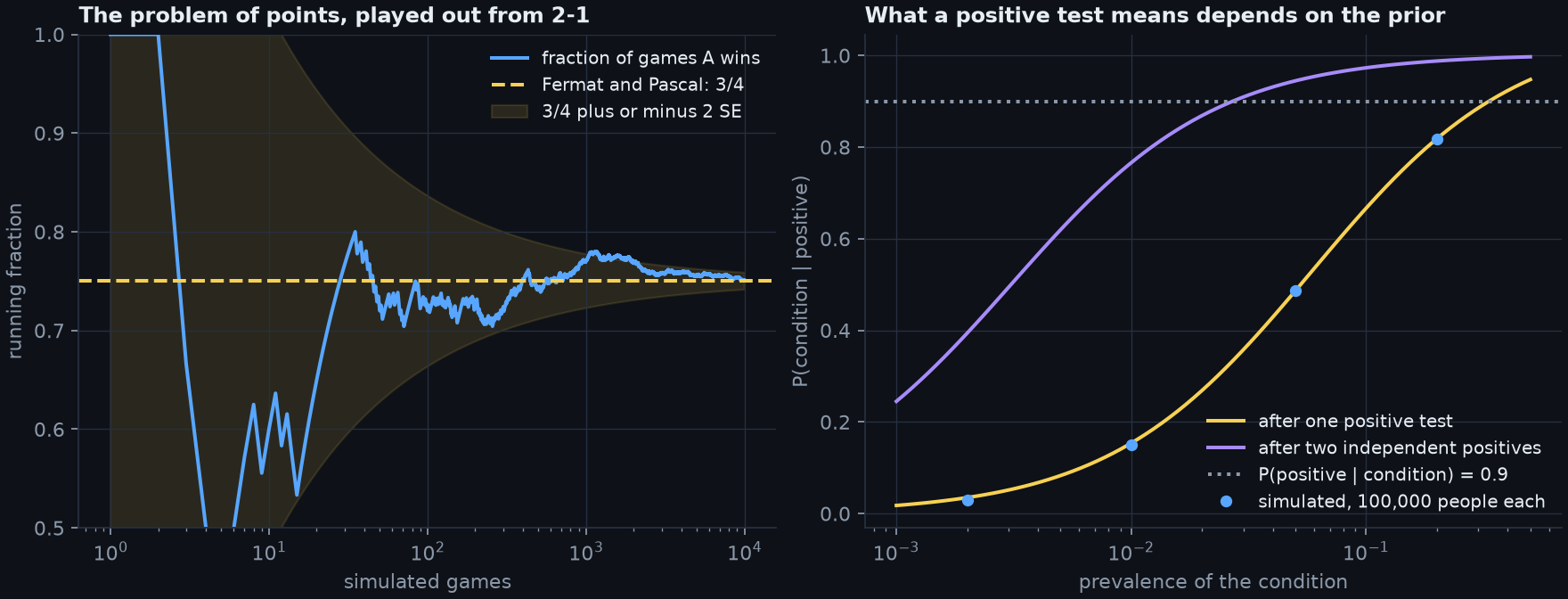 Lab 2 · Chance, CountedExact answers, checked by simulation
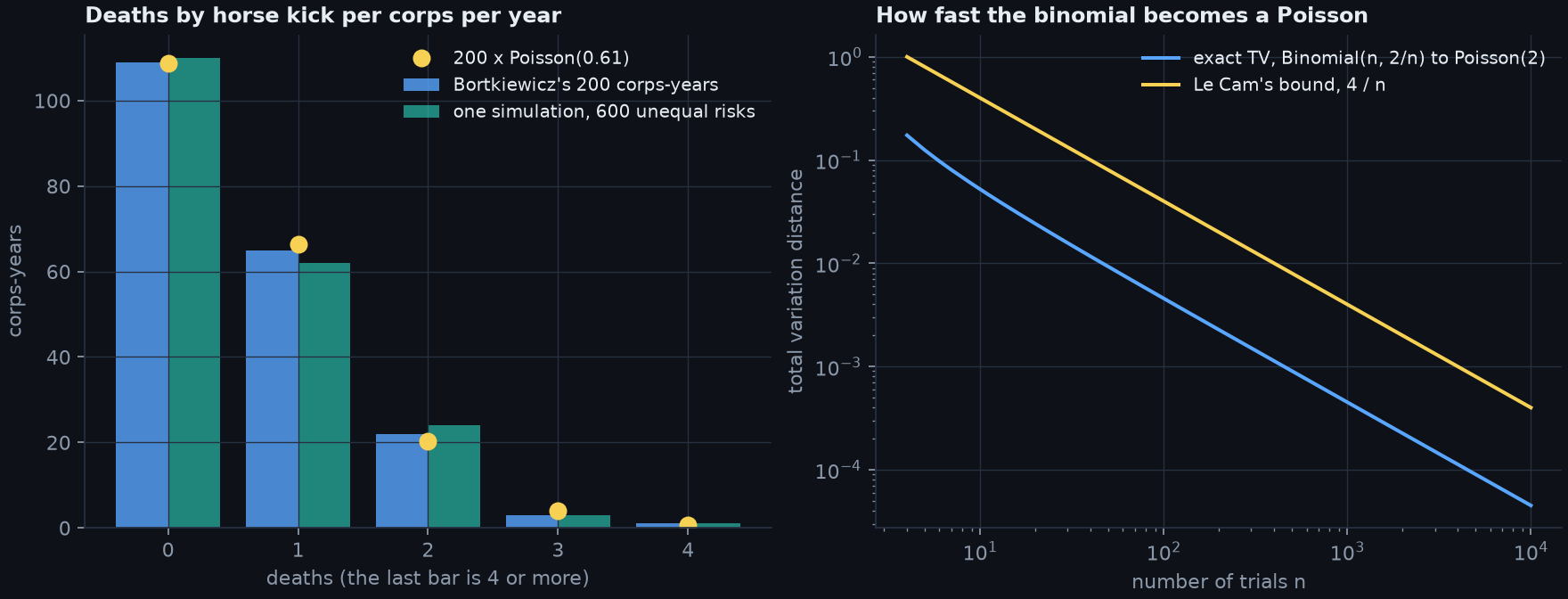 Lab 3 · The Family of DistributionsThe law of rare events, with Le Cam's bound
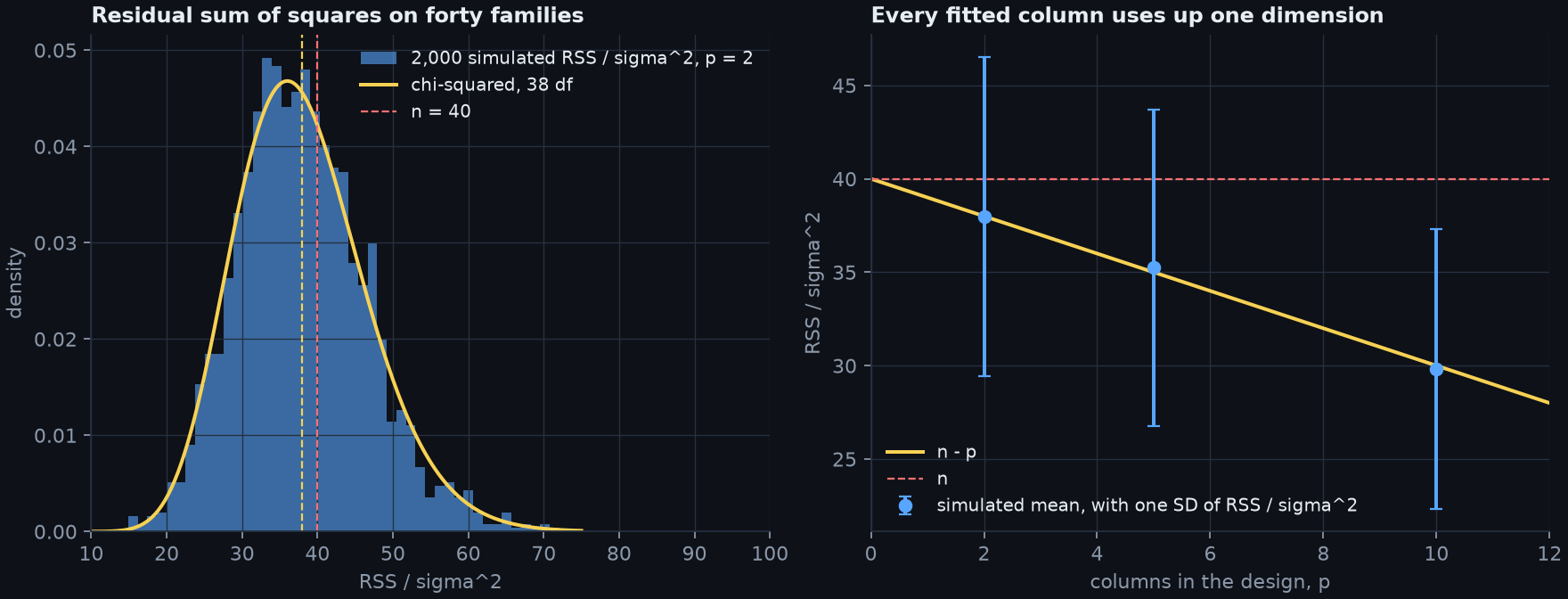 Lab 4 · Matrices for StatisticsThe hat matrix and degrees of freedom
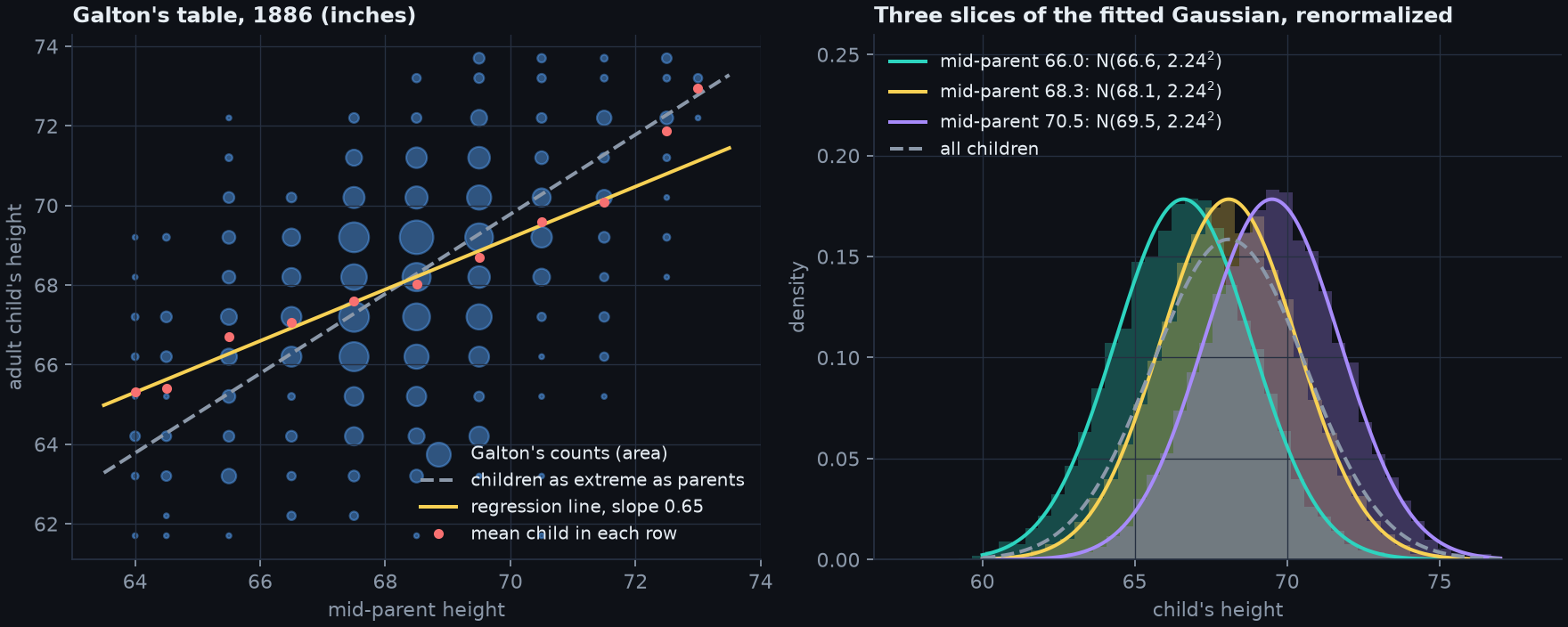 Lab 5 · Many Variables at OnceSlicing an ellipse: conditional means, Eve's law and regression to the mean
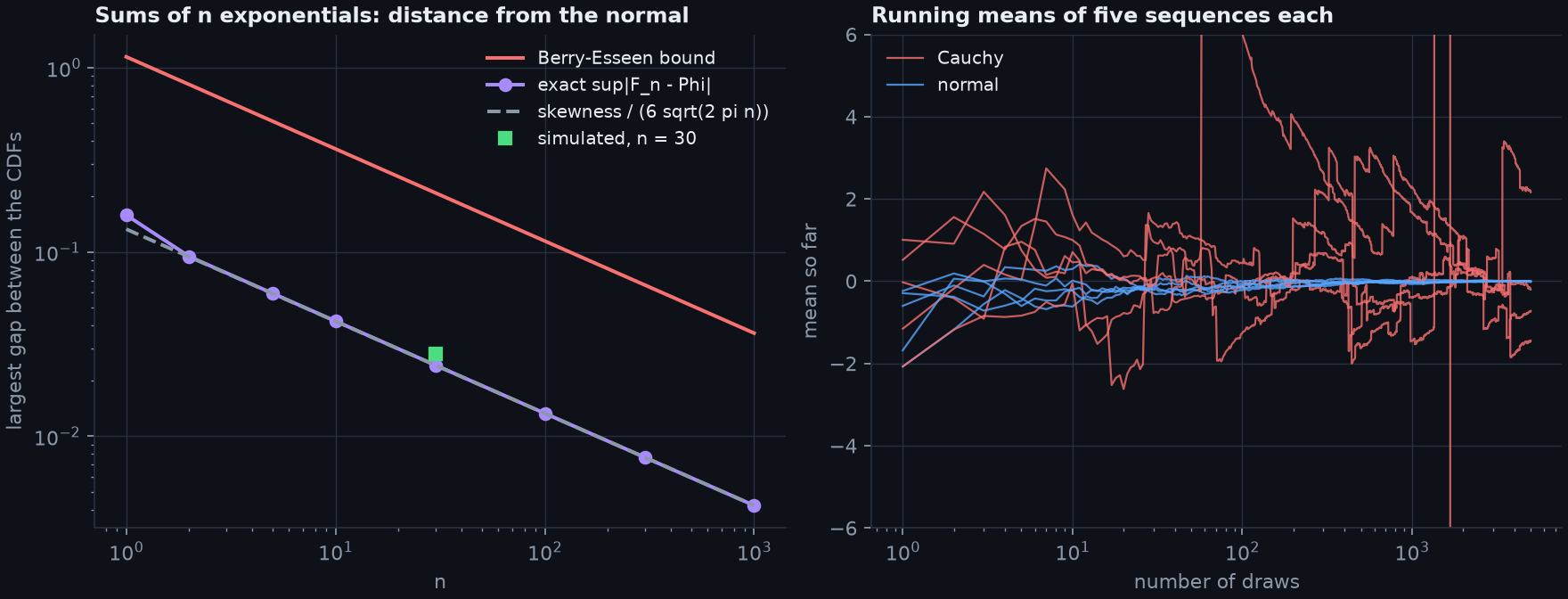 Lab 6 · The Laws of AveragesThe speed of the central limit theorem, and where it stops
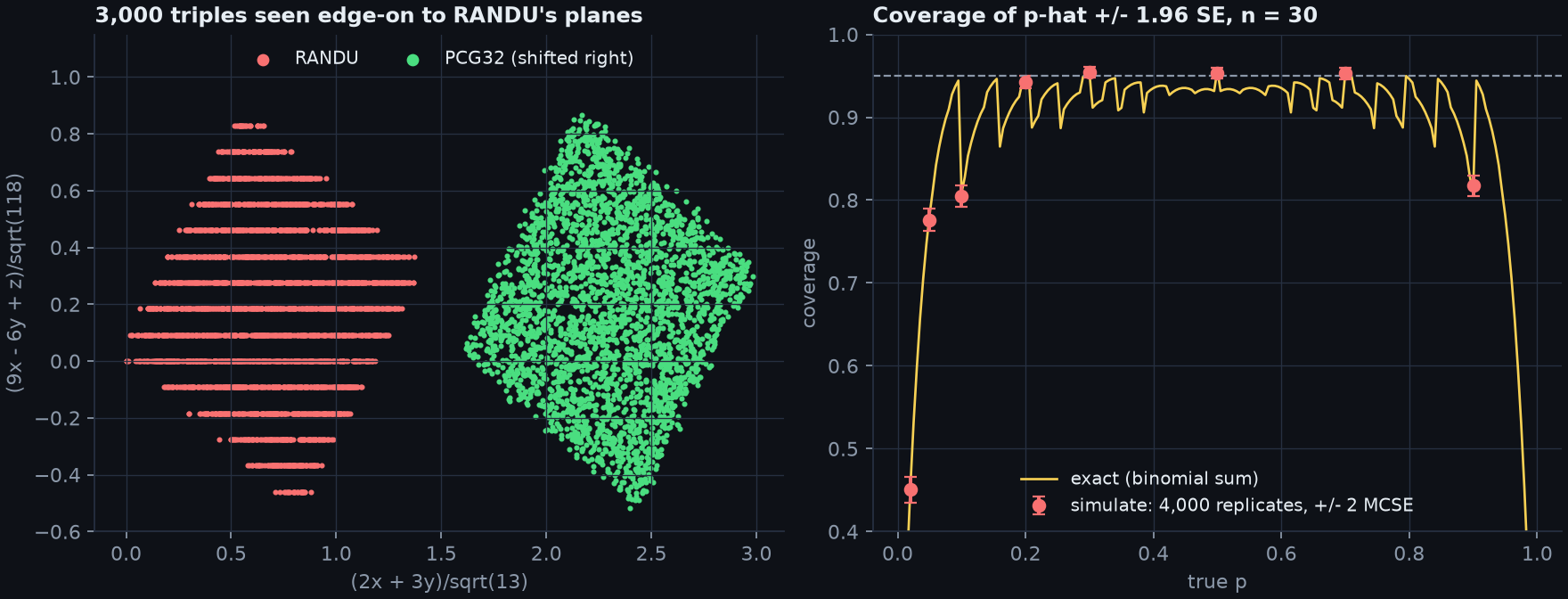 Lab 7 · Randomness on DemandA bad generator and an honest simulation study
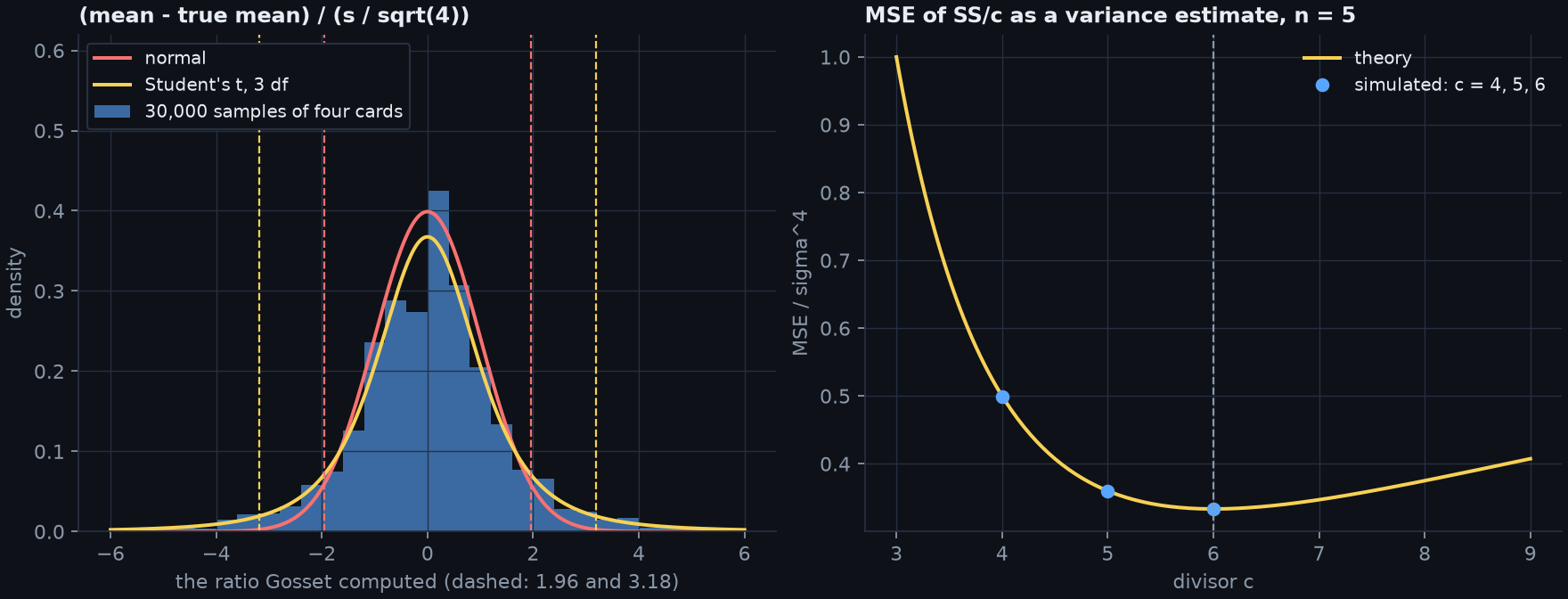 Lab 8 · From Sample to PopulationStudent's cards: 1.96 against the t multiplier
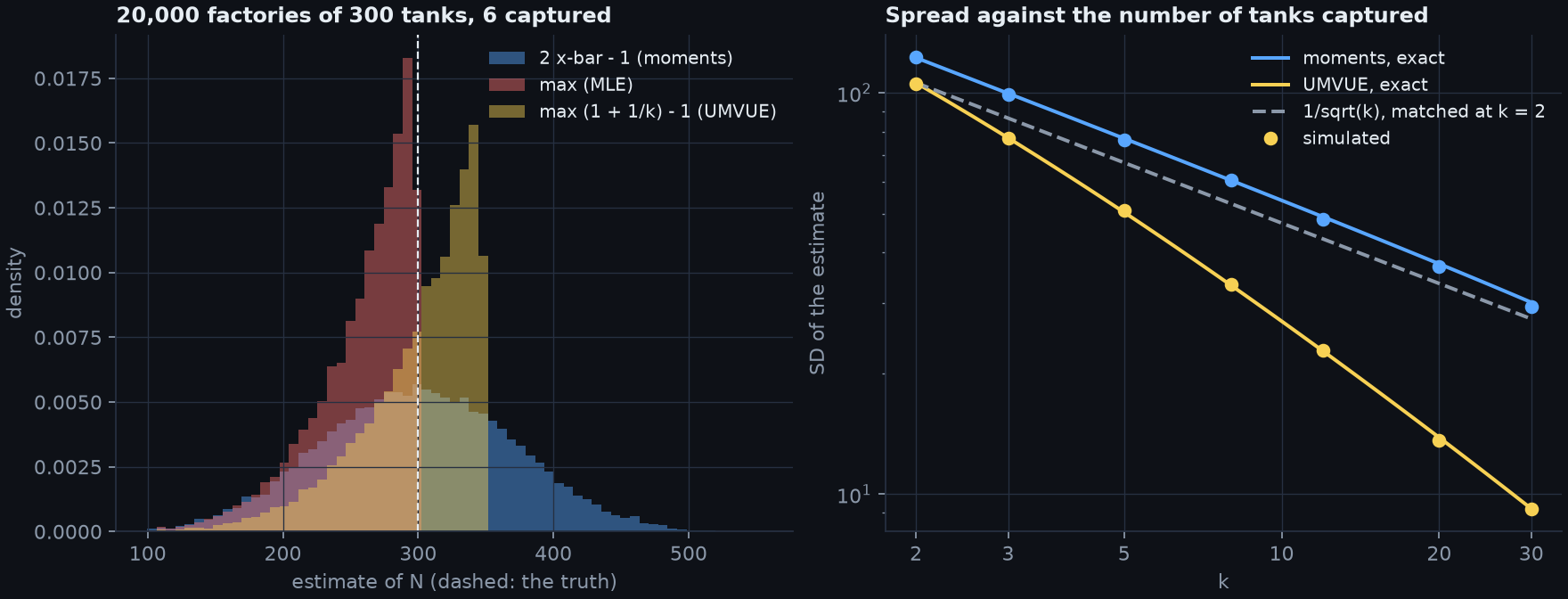 Lab 9 · EstimationThe tank factory game
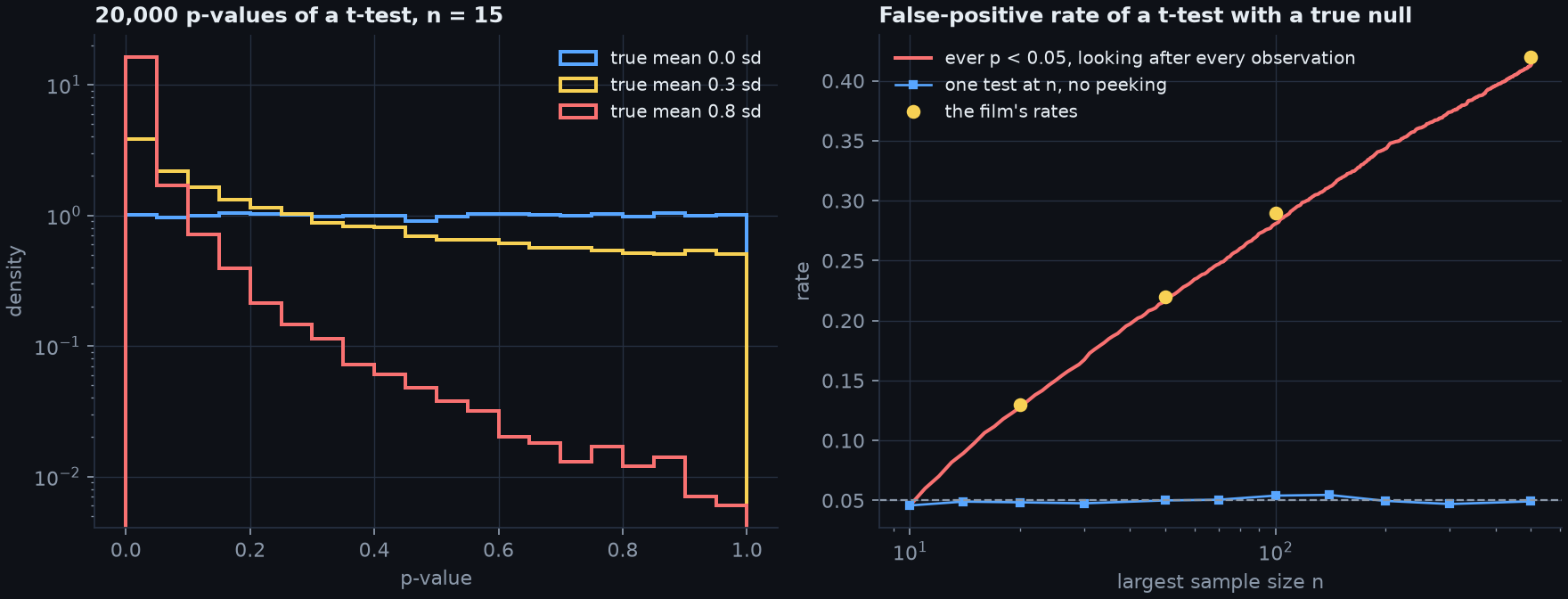 Lab 10 · SignificanceWhat a 5% test promises, and two ways to break it
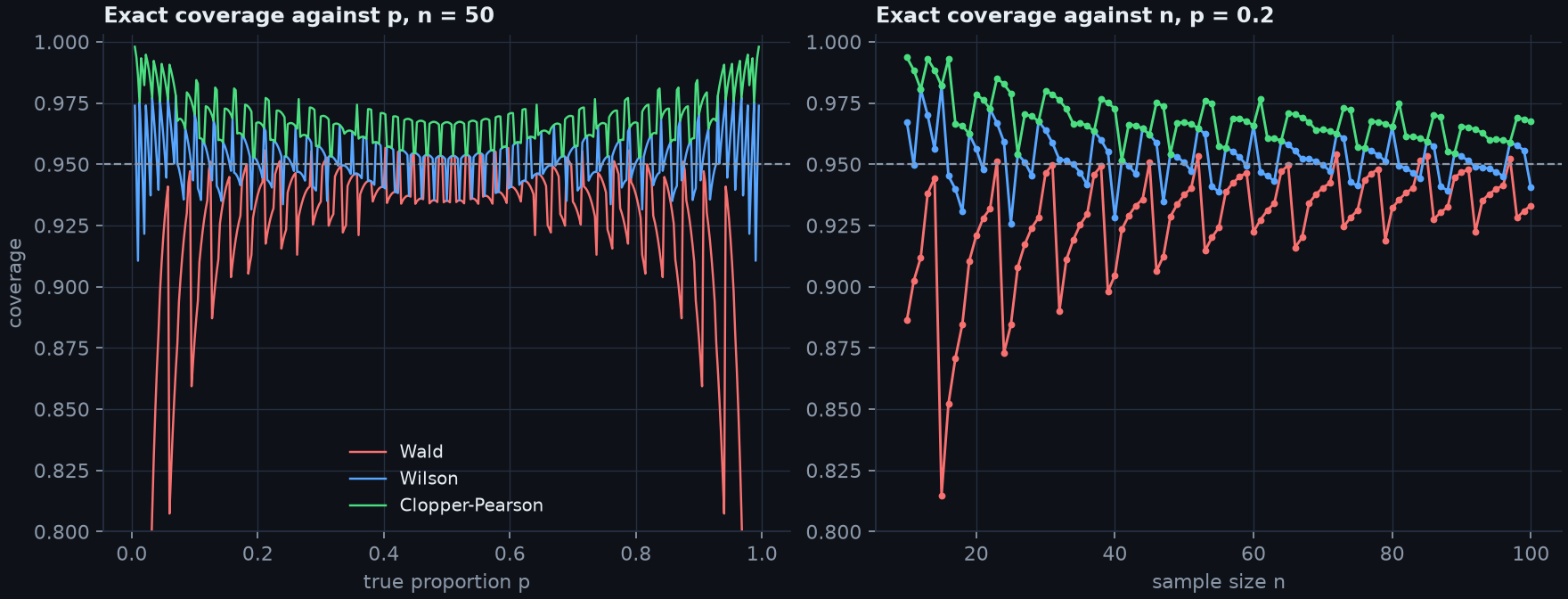 Lab 11 · Honest IntervalsThe sawtooth: exact coverage of intervals for a proportion
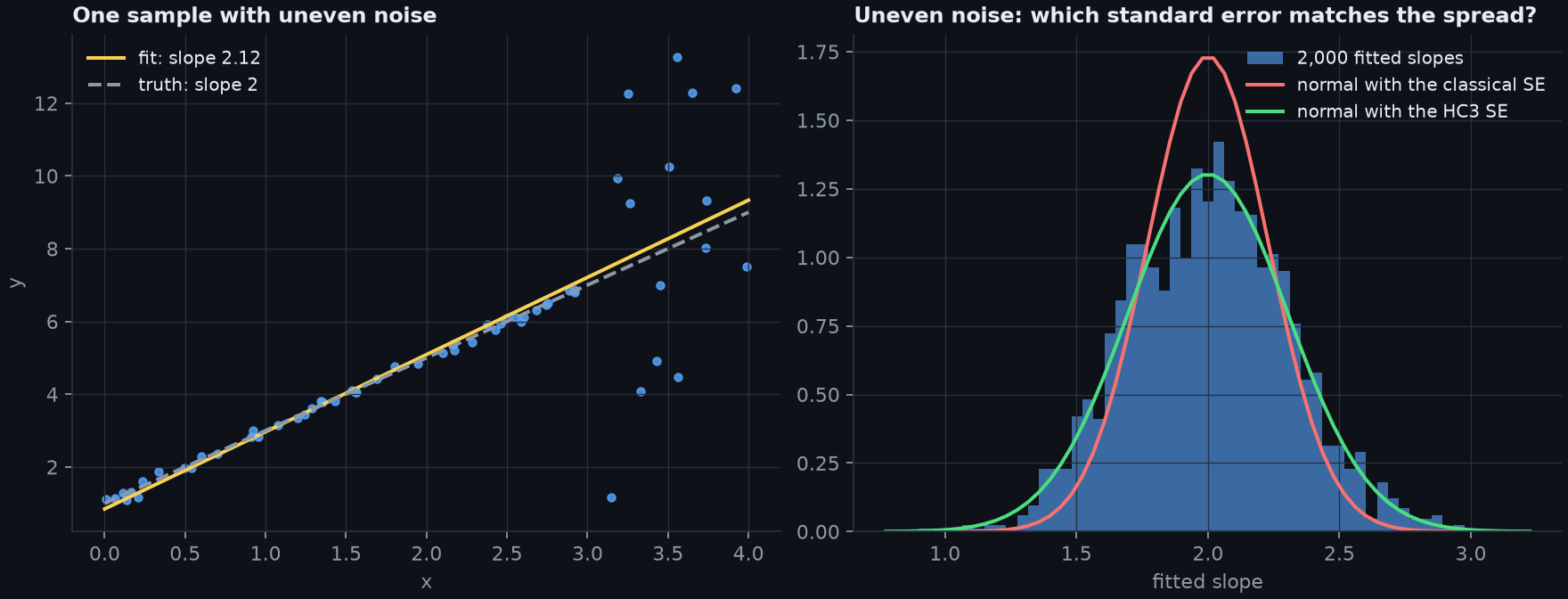 Lab 12 · Least SquaresLeast squares under even and uneven noise
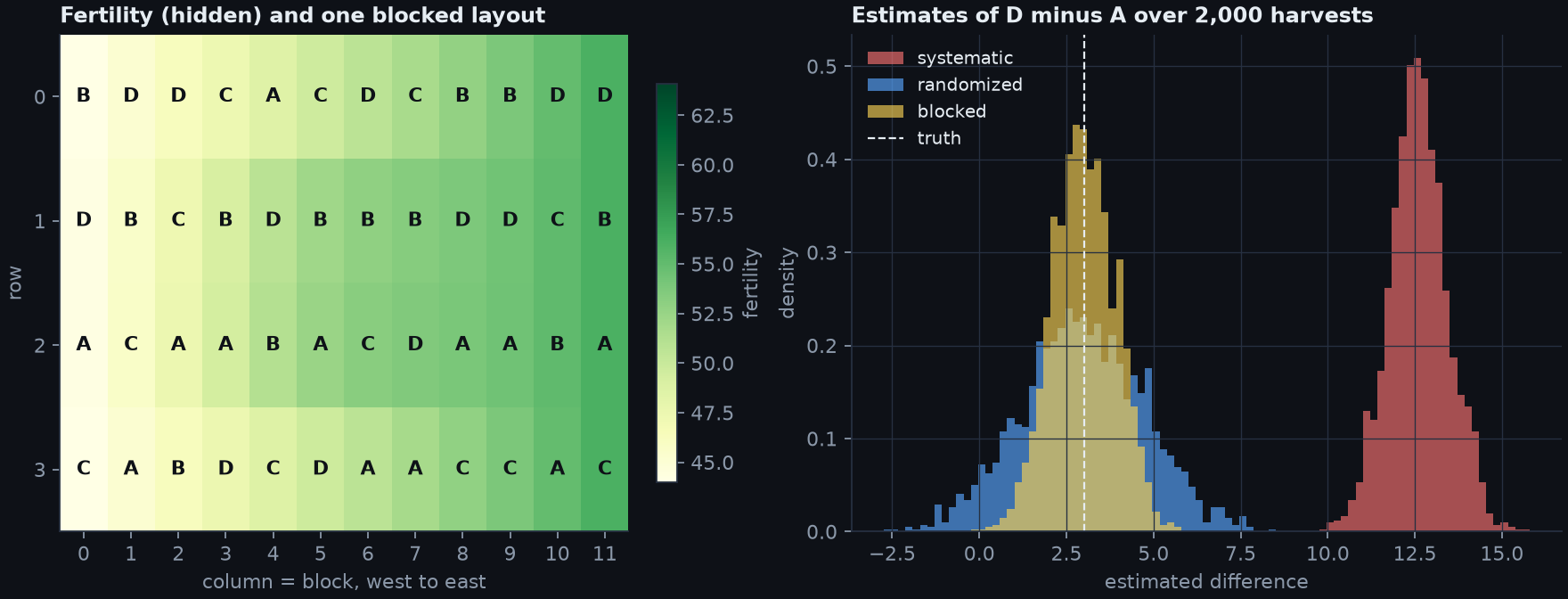 Lab 13 · Experiments by DesignSystematic, randomized, blocked: three layouts on one field
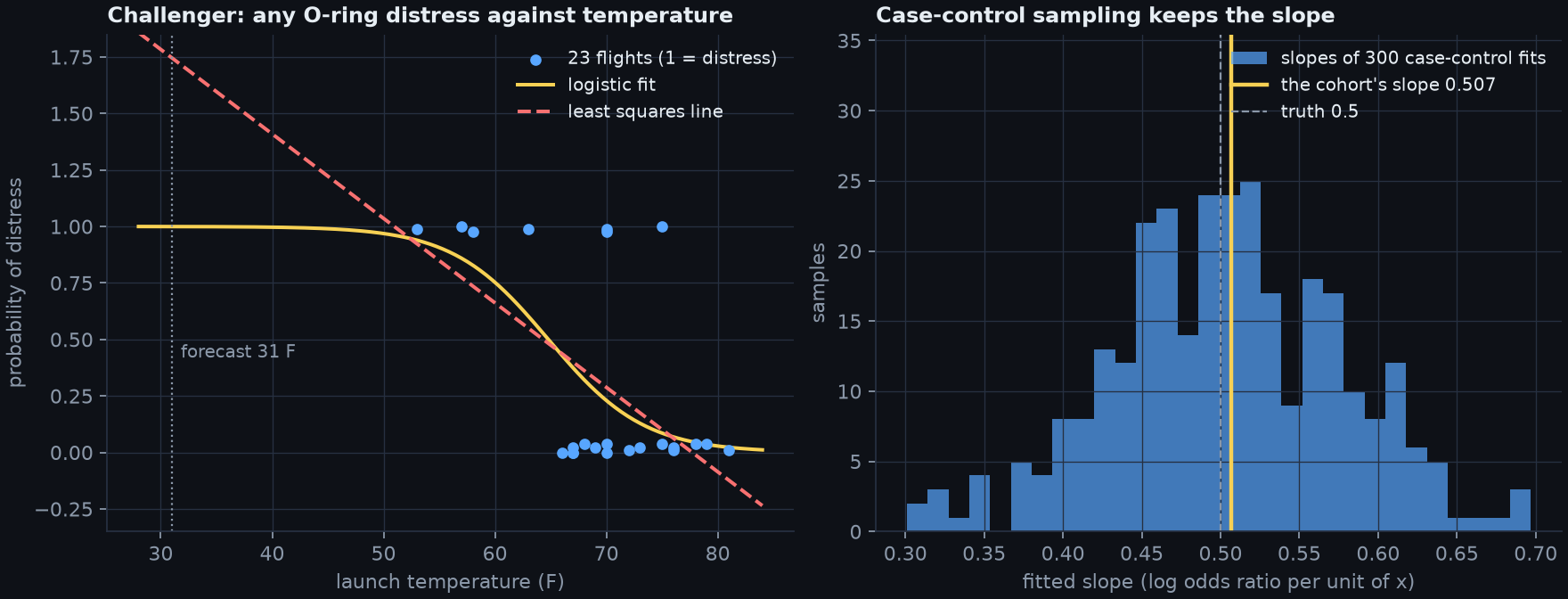 Lab 14 · Counts and CategoriesThe Challenger fit, and what sampling on the outcome preserves
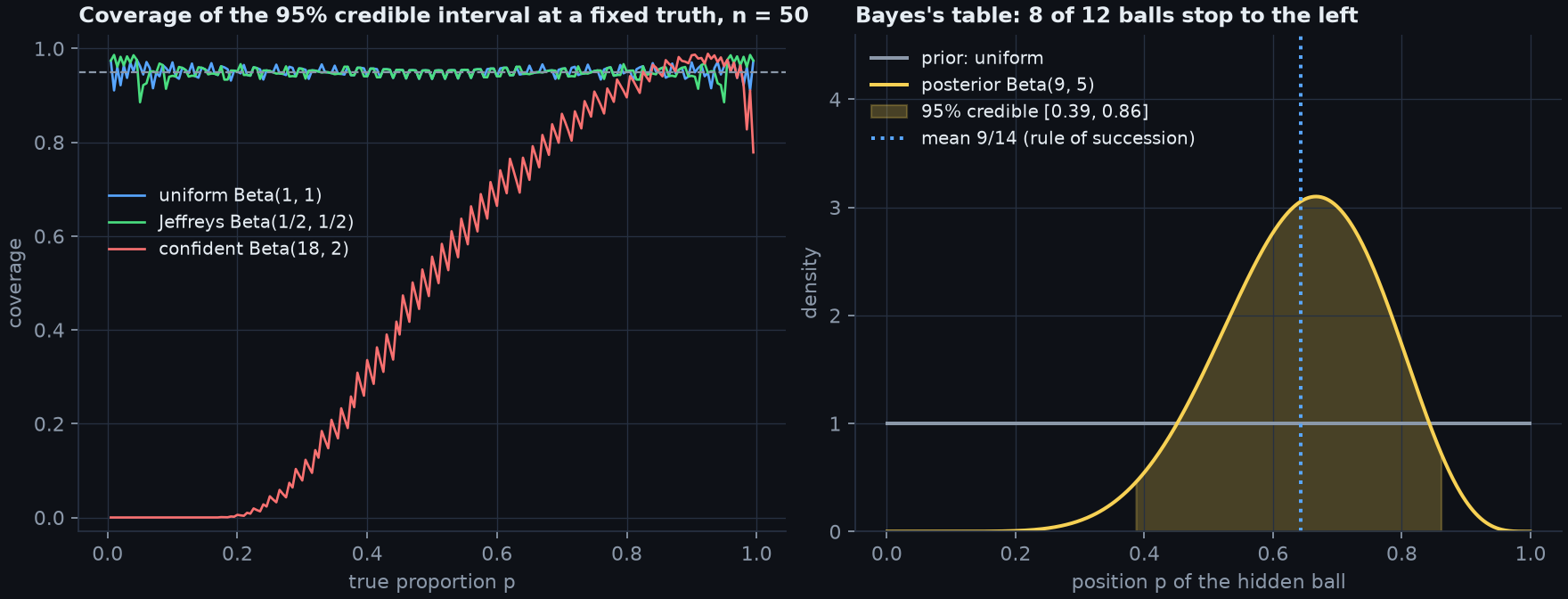 Lab 15 · First BayesCredible intervals on the Coverage Board
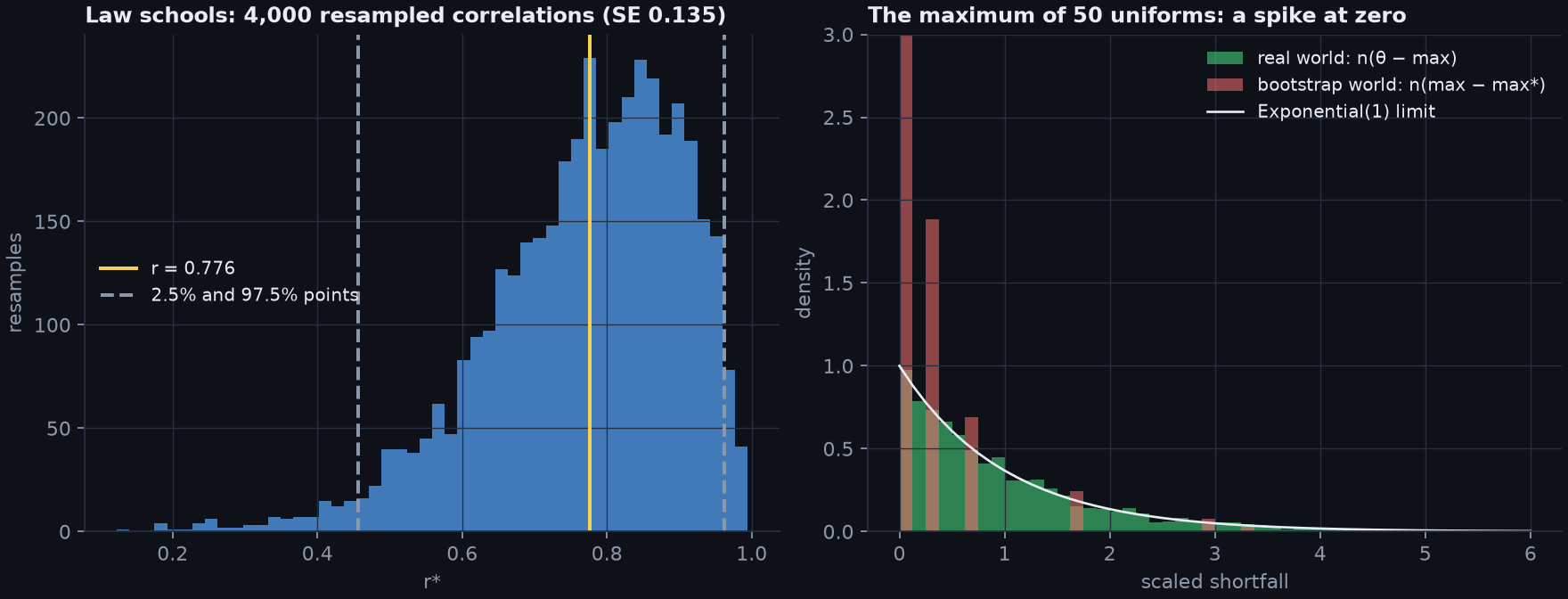 Lab 16 · Without AssumptionsThe bootstrap, where it works and where it fails
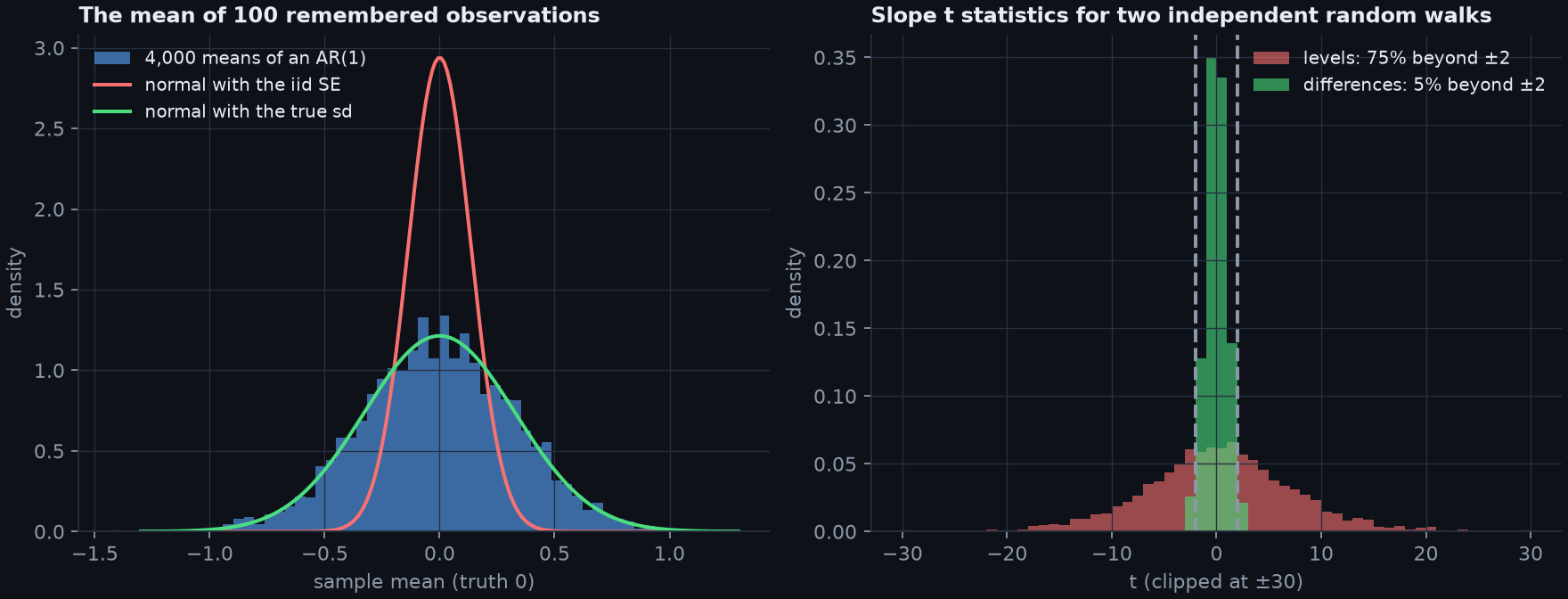 Lab 17 · Time SeriesStatistics on series that remember
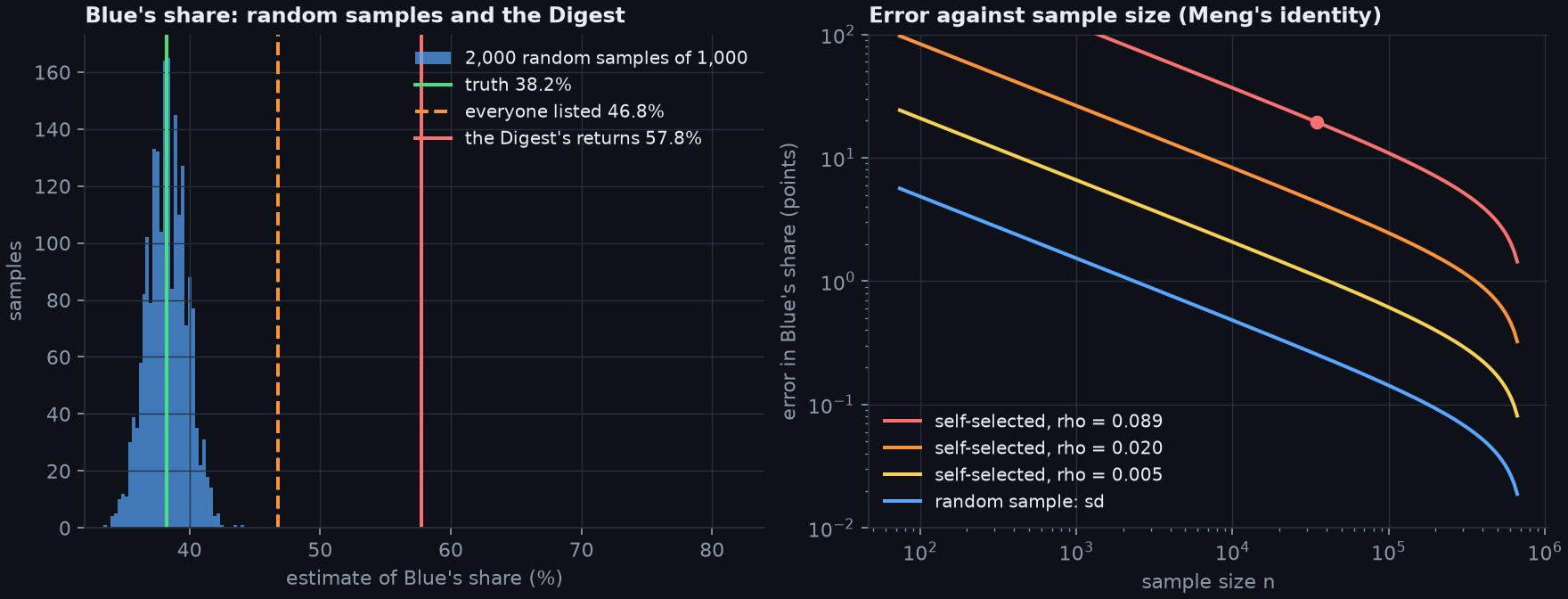 Lab 18 · Who Did You Ask? Sampling and SurveysA huge biased sample against a small random one
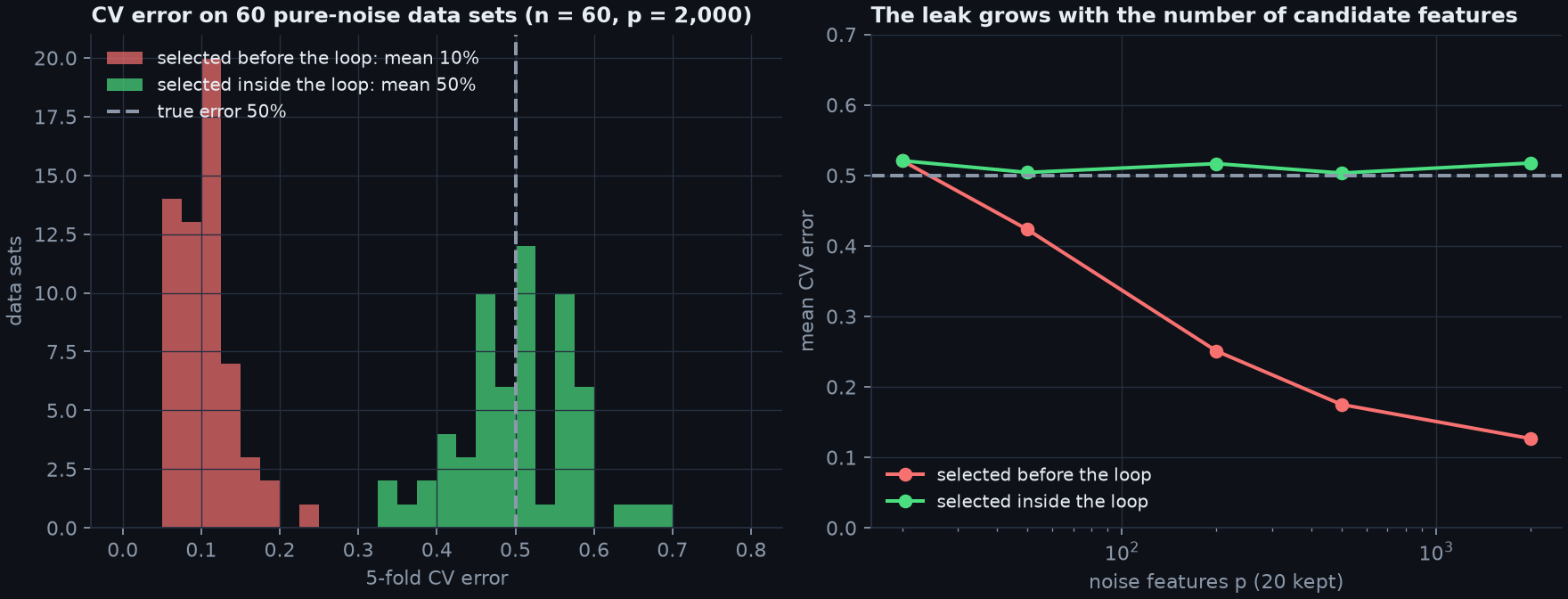 Lab 19 · Learning from DataLeakage: selecting features before cross-validation
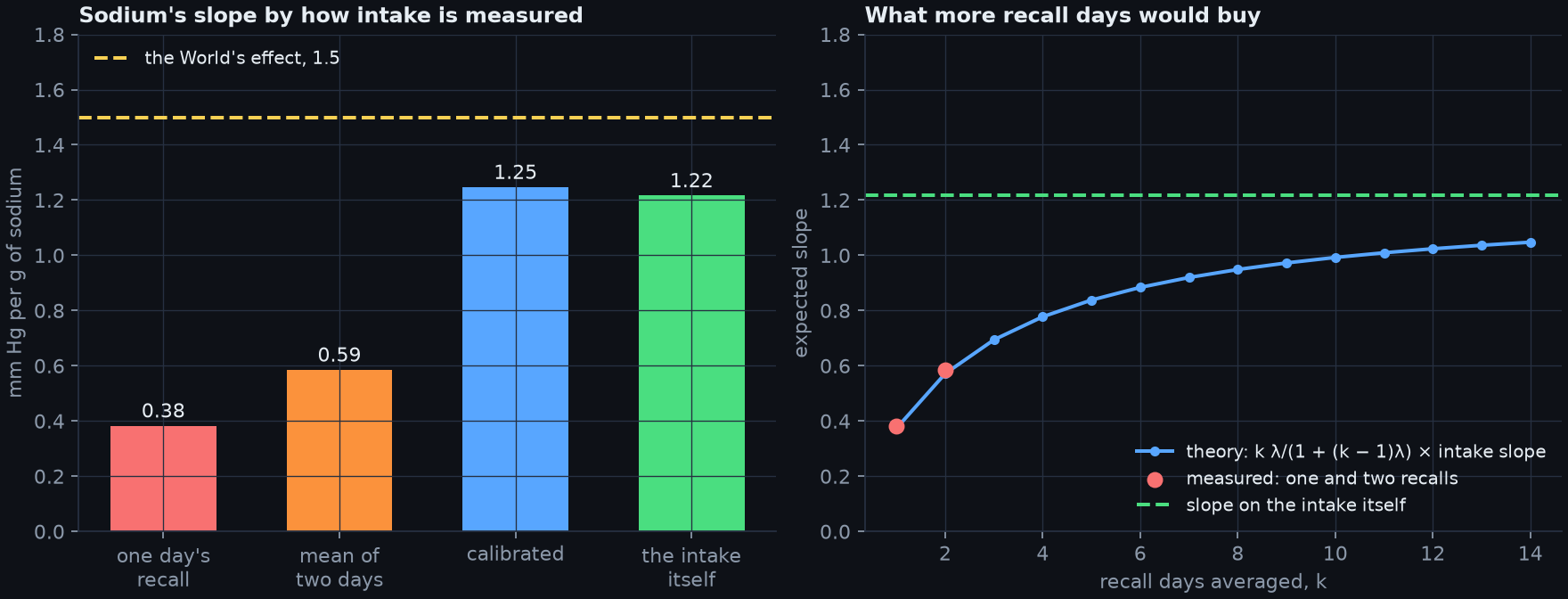 Lab 20 · The AnalysisOne day's recall against usual intake
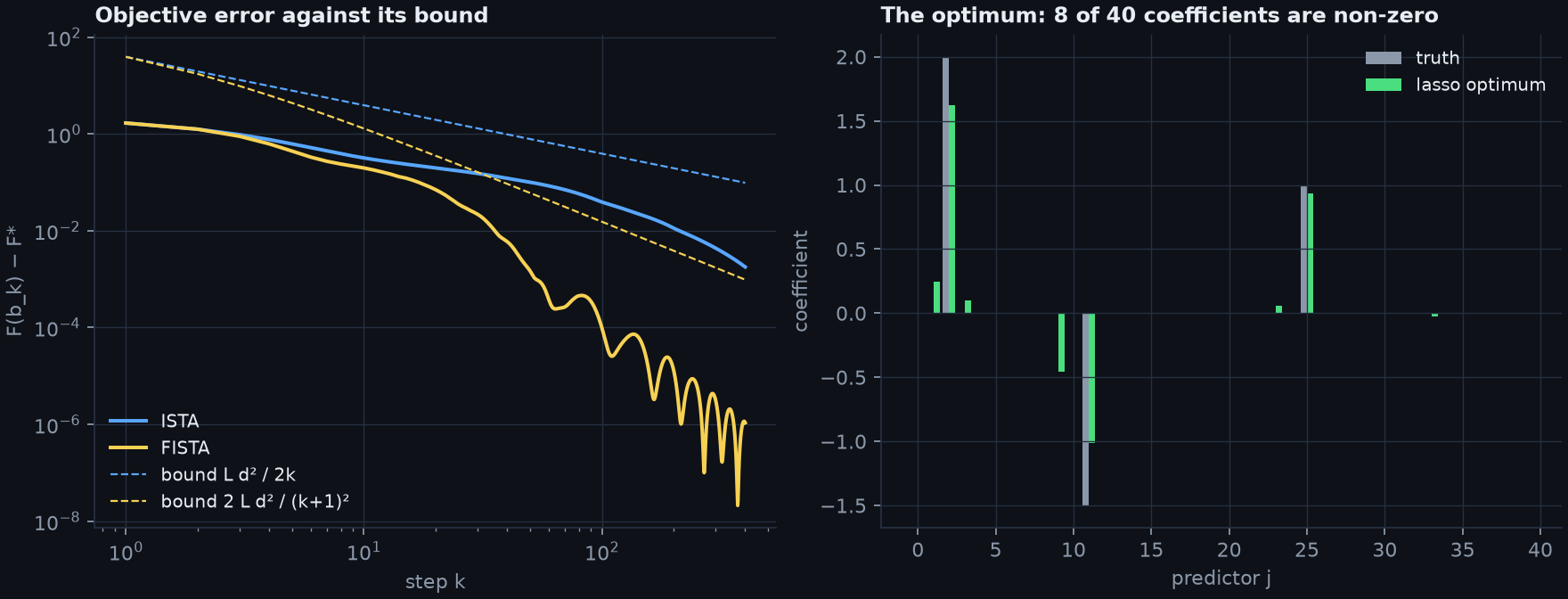 Lab 21 · Optimization for StatisticsISTA against FISTA, with a certificate
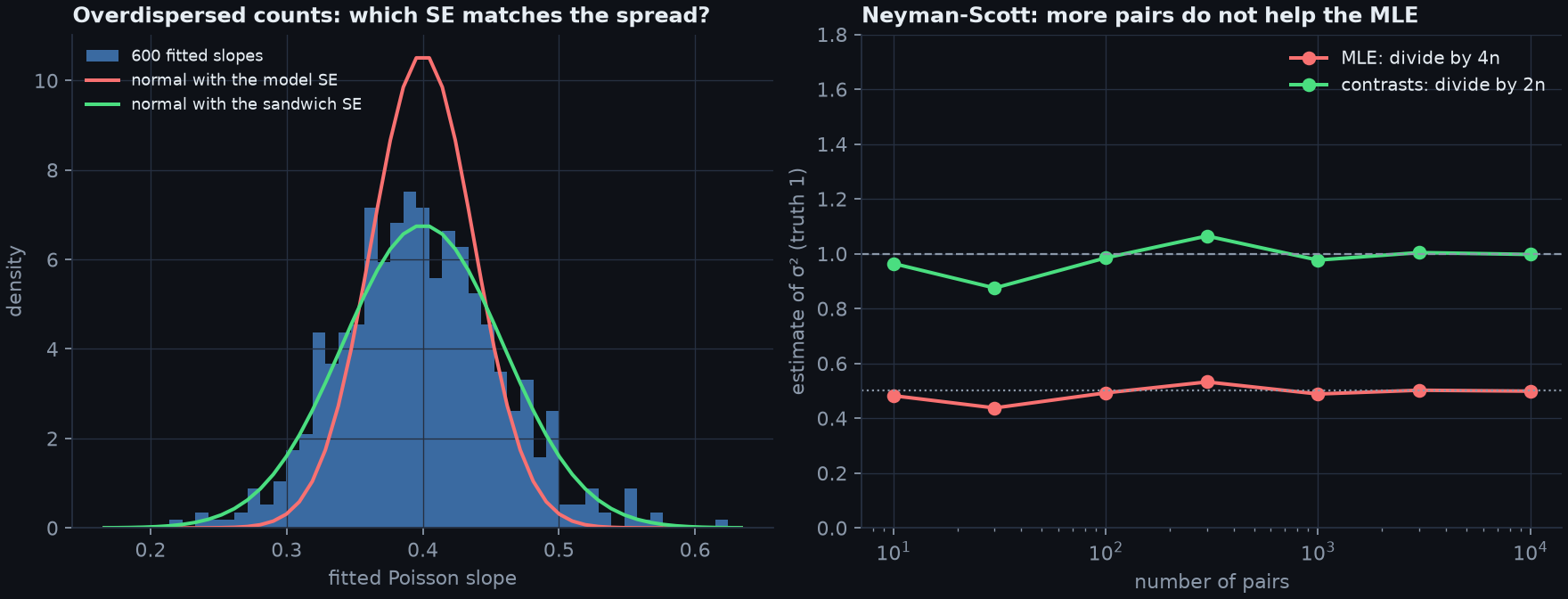 Lab 22 · Likelihood in DepthThe sandwich under a wrong variance, and Neyman-Scott
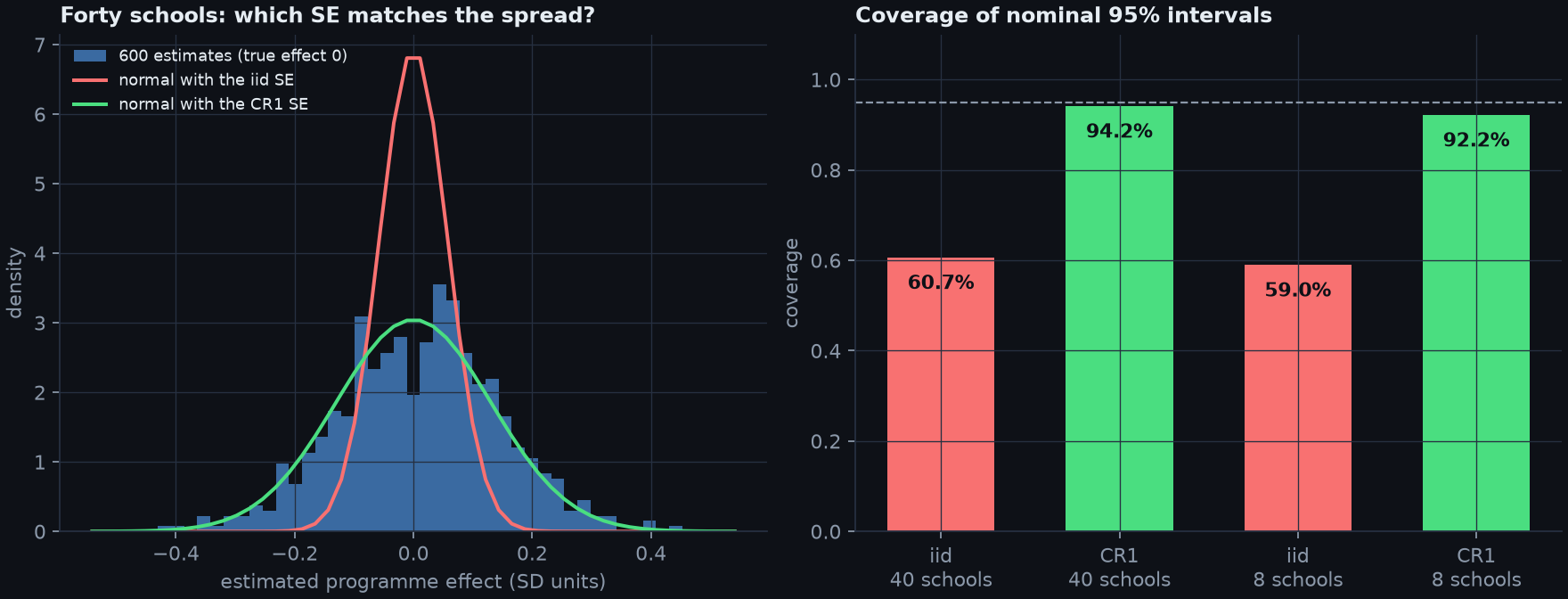 Lab 23 · The Linear Model in DepthMoulton's factor, and cluster-robust errors with few clusters
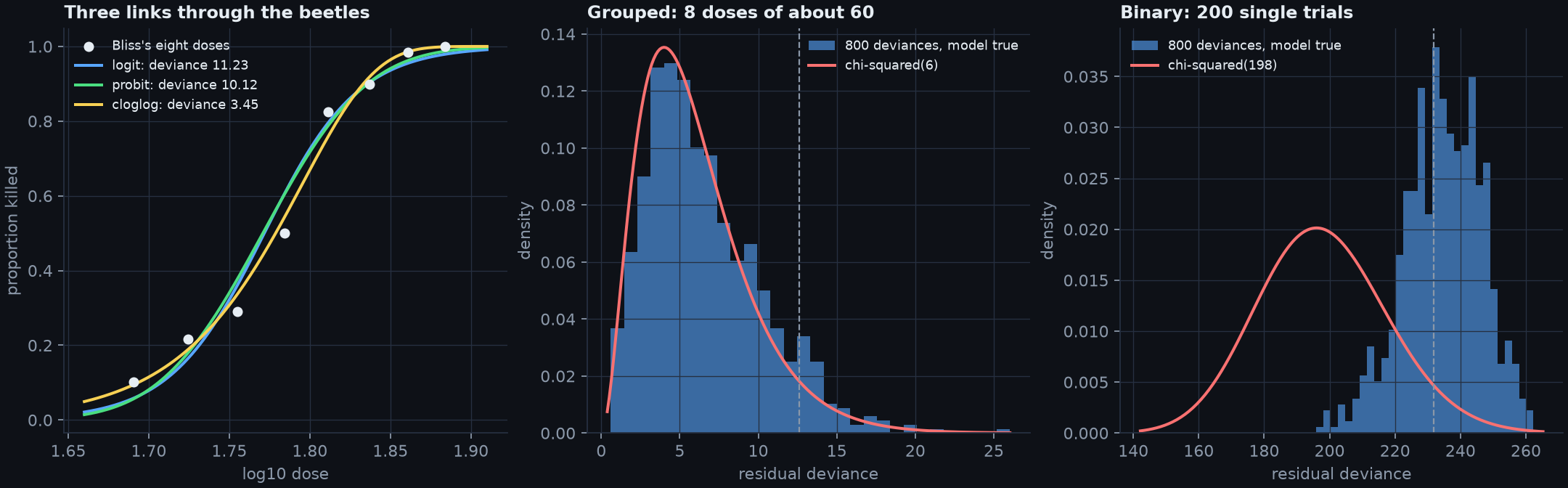 Lab 24 · Generalized Linear ModelsBliss's beetles, and when the deviance is chi-squared
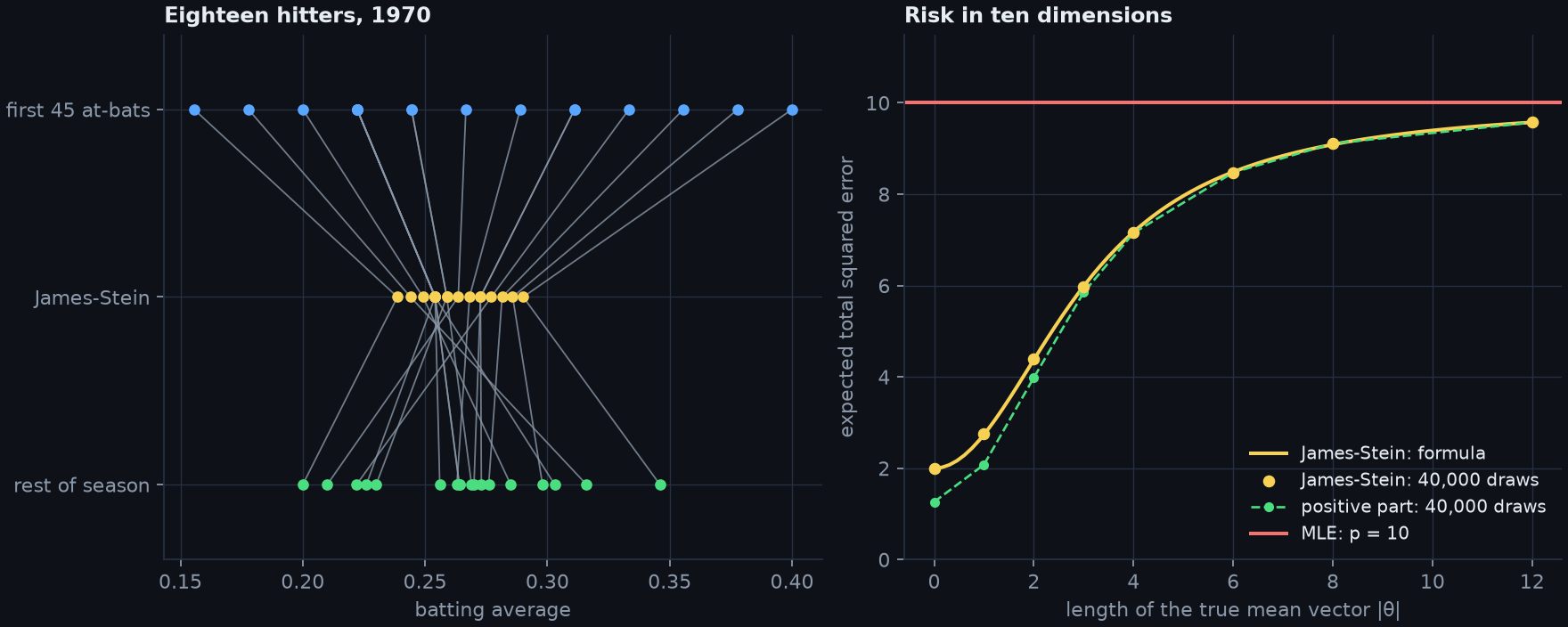 Lab 25 · Borrowing StrengthJames-Stein on the hitters, and its risk for every theta
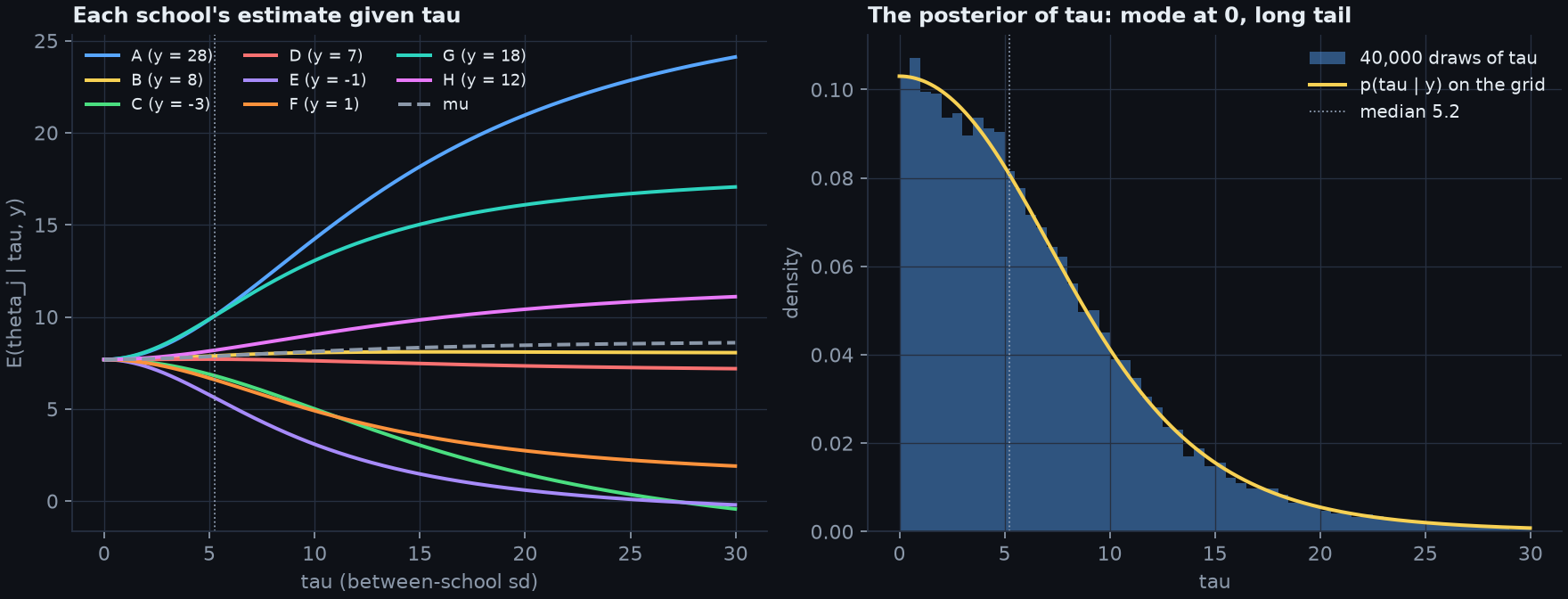 Lab 26 · Bayesian Data AnalysisThe eight schools: tau on a grid, then mu, then the effects
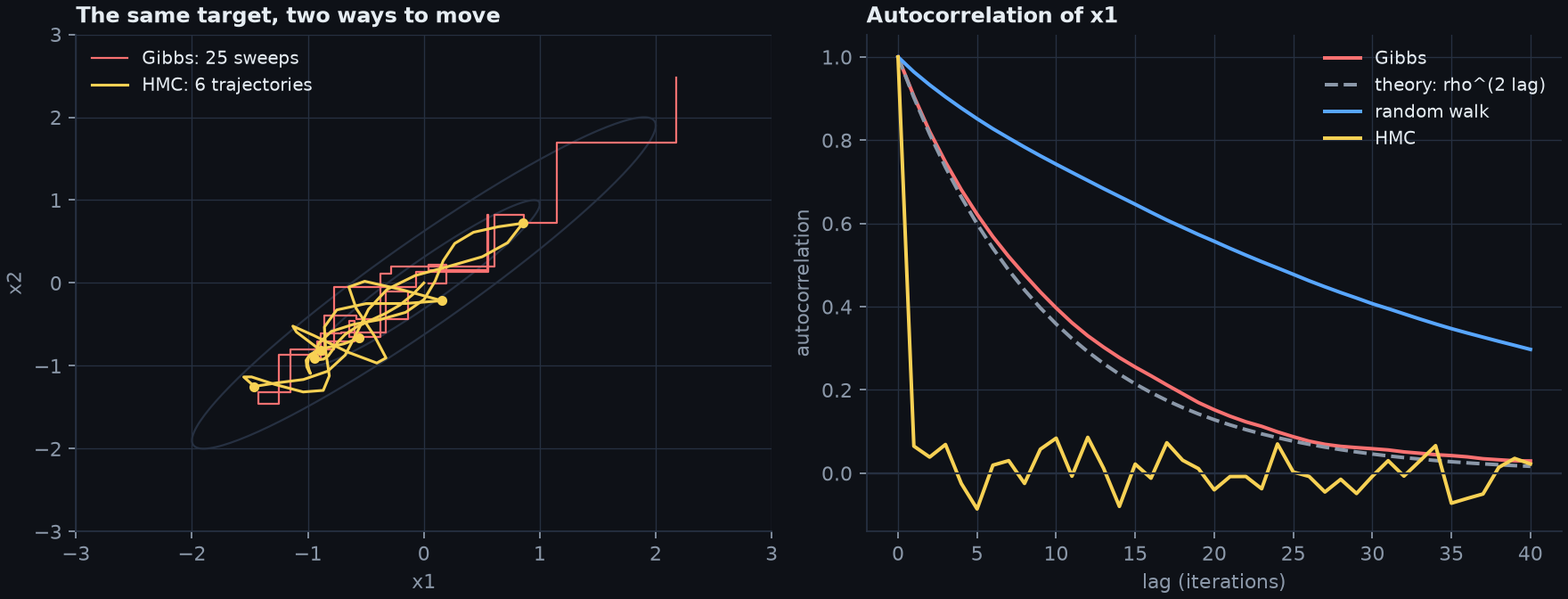 Lab 27 · Bayesian ComputationThree samplers, one correlated normal
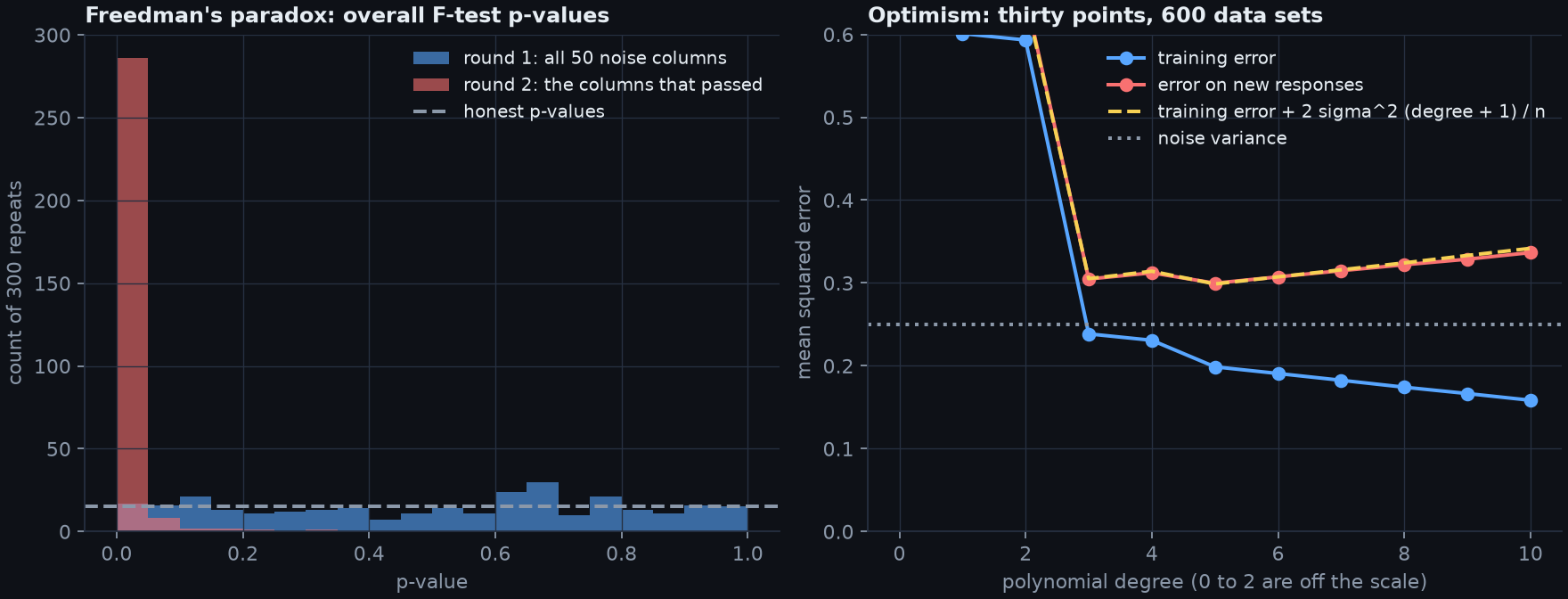 Lab 28 · Which Model?Freedman's paradox and the price of a parameter
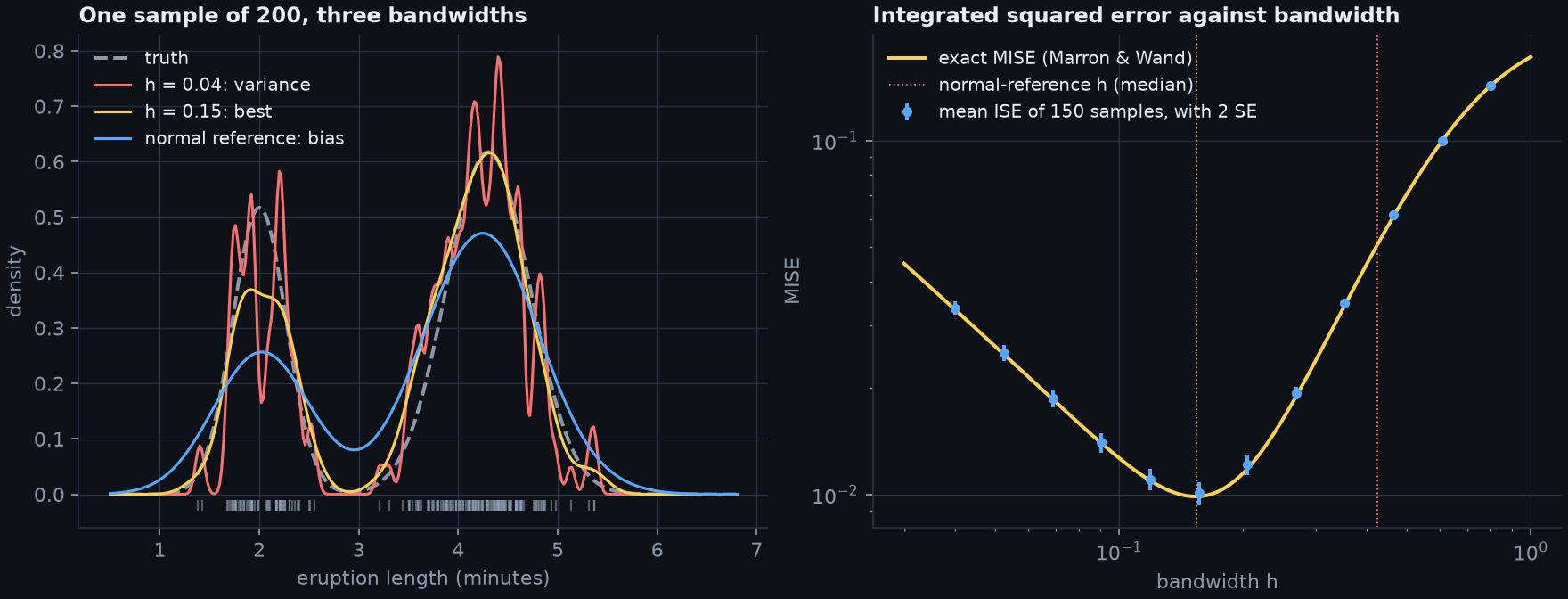 Lab 29 · SmoothingThe bandwidth trade-off, exactly and by simulation
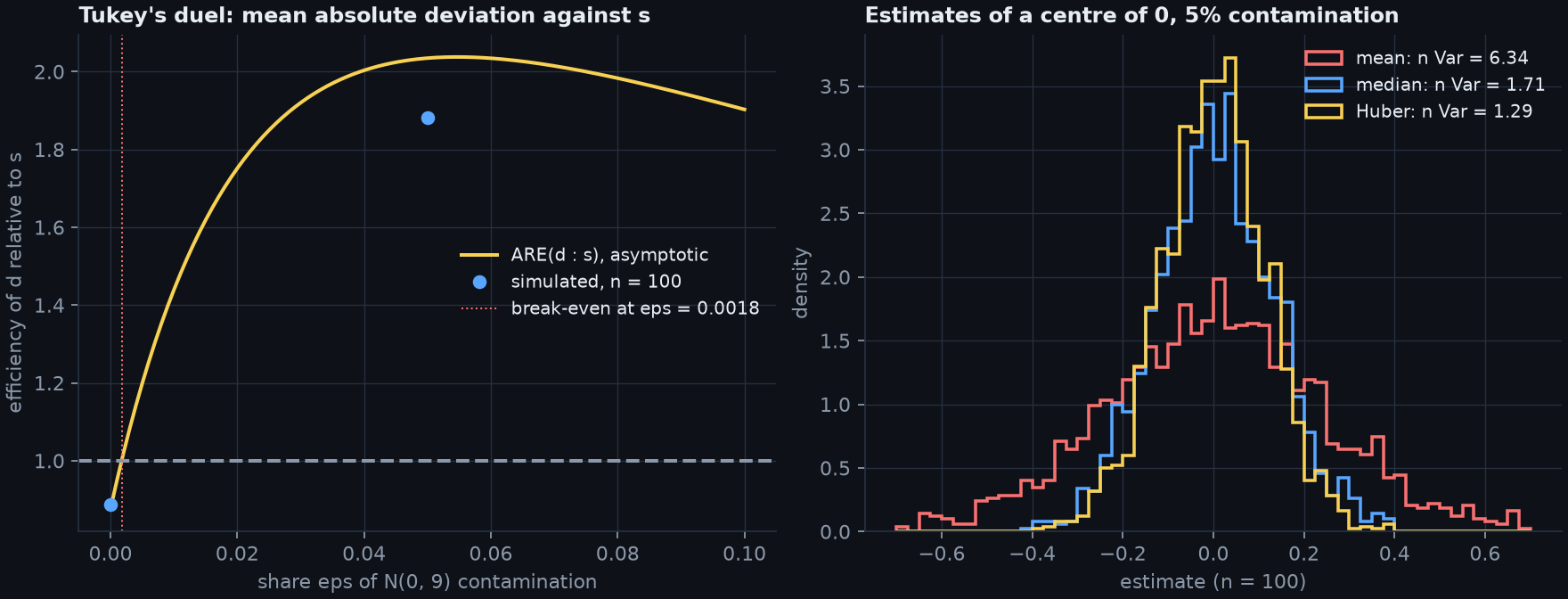 Lab 30 · Robust StatisticsA little contamination: efficiency, variance and breakdown
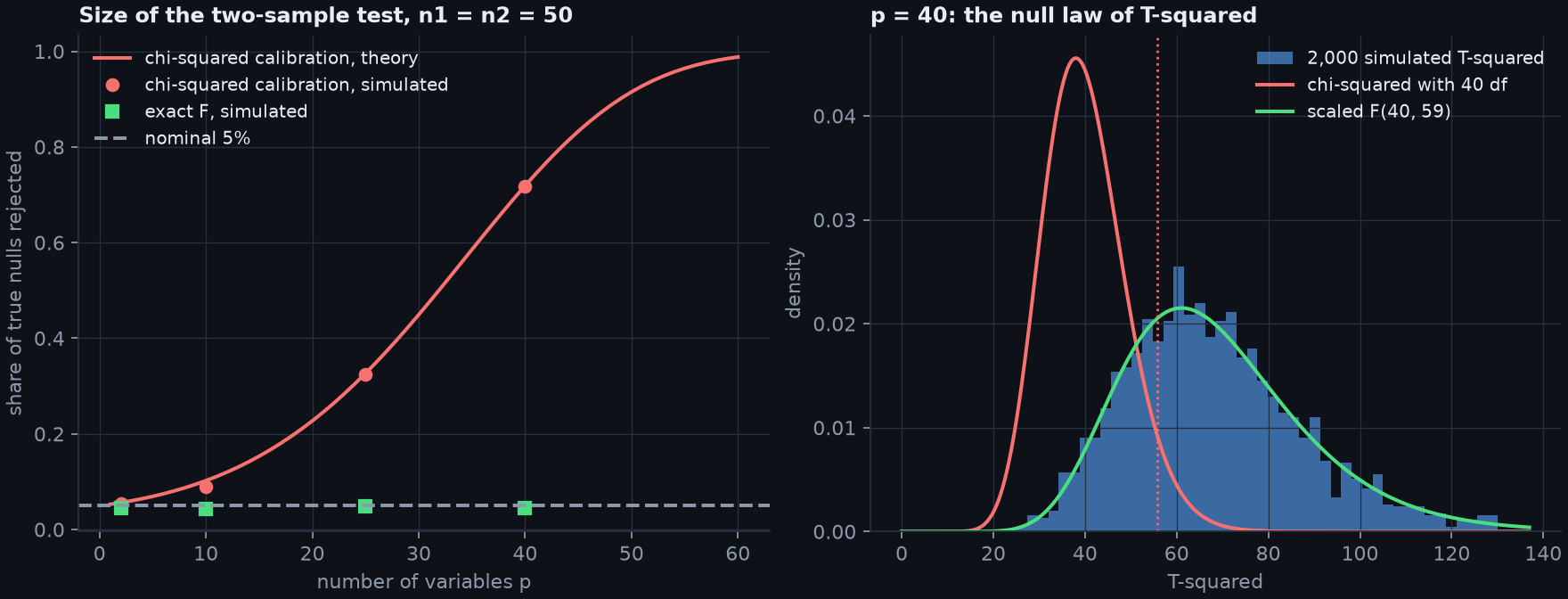 Lab 31 · Multivariate AnalysisHotelling's T-squared when p approaches n
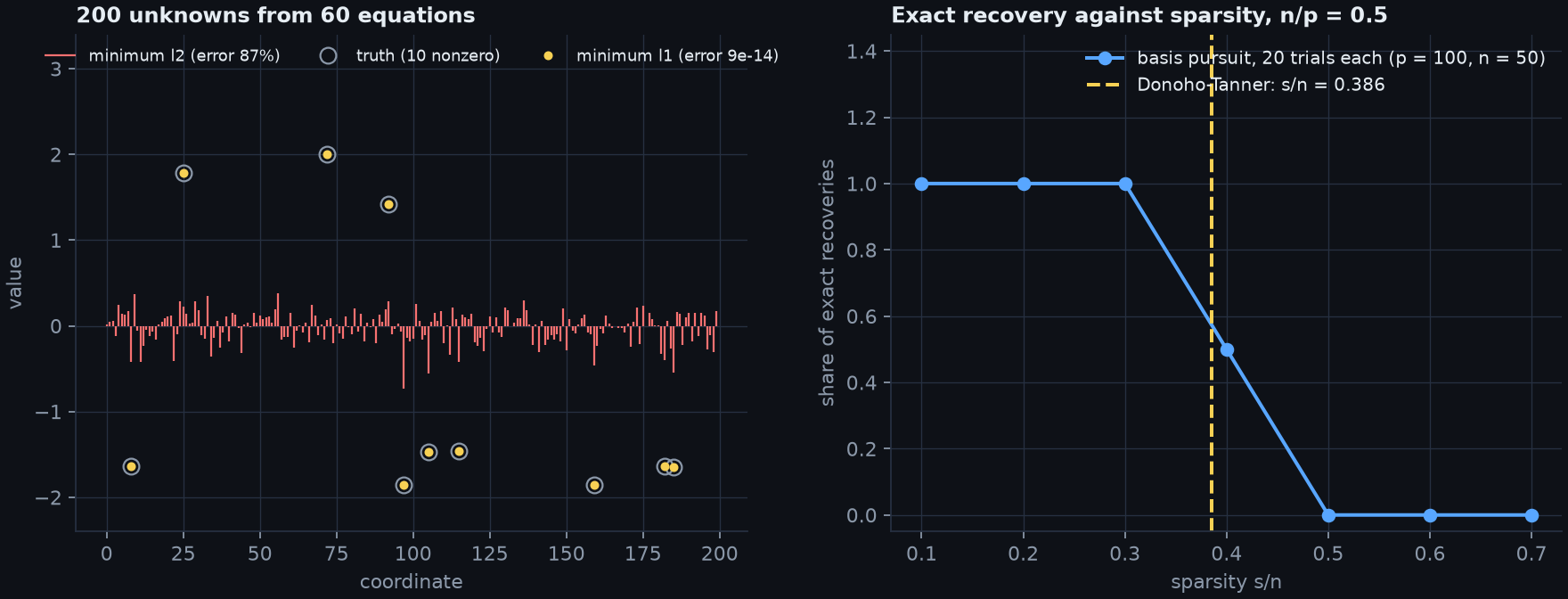 Lab 32 · SparsityBasis pursuit, least norm, and the phase transition
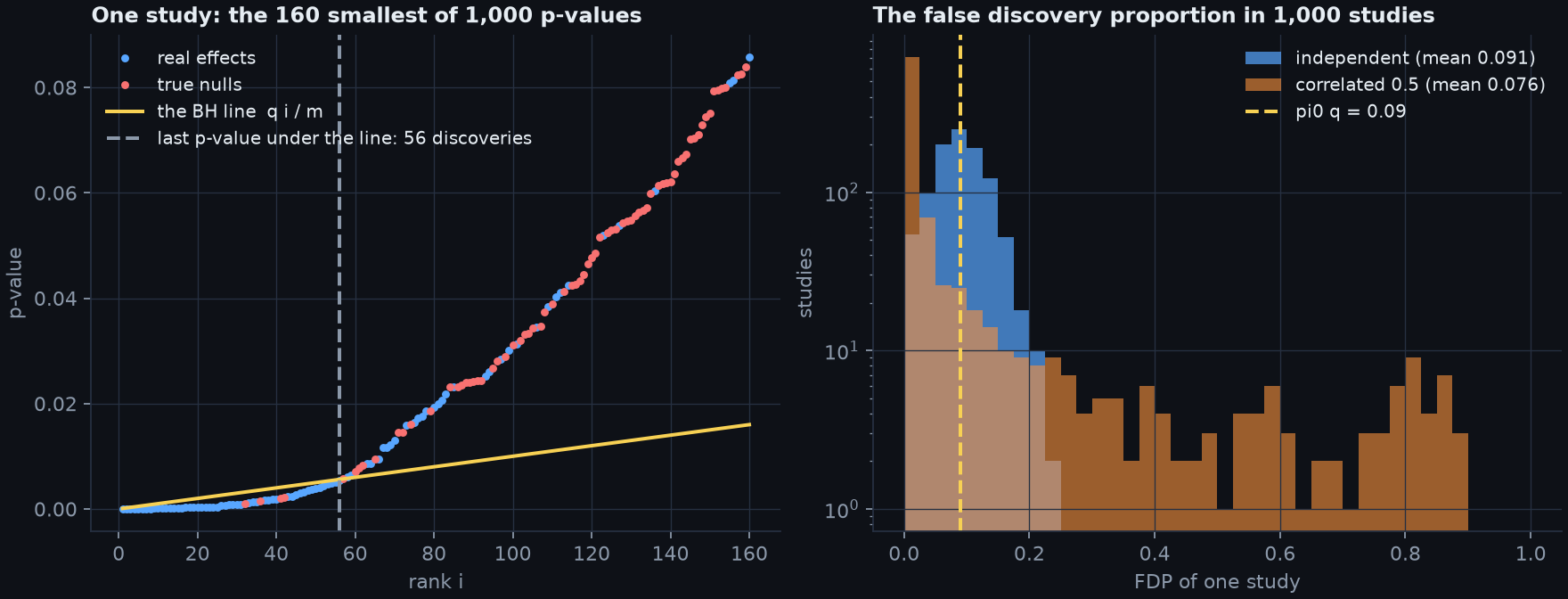 Lab 33 · Thousands of QuestionsThe false discovery rate is pi0 times q, on average
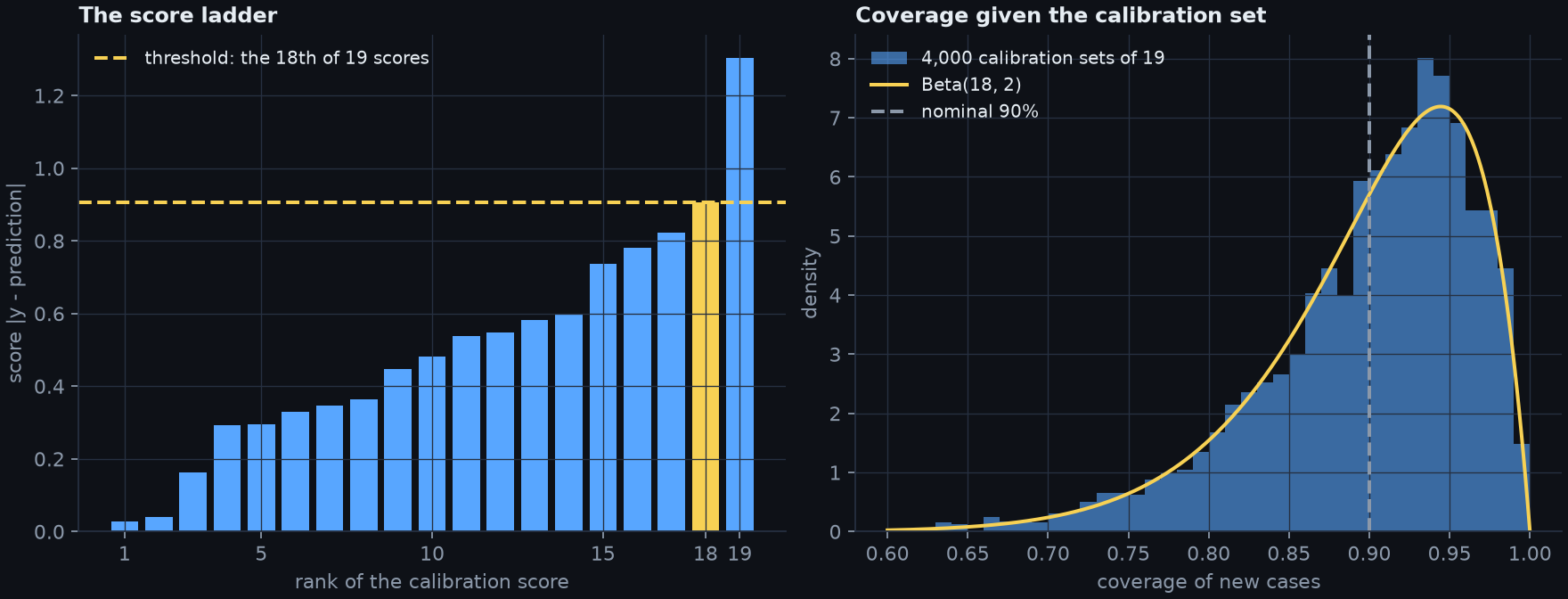 Lab 34 · Prediction with GuaranteesSplit conformal: what 90% promises
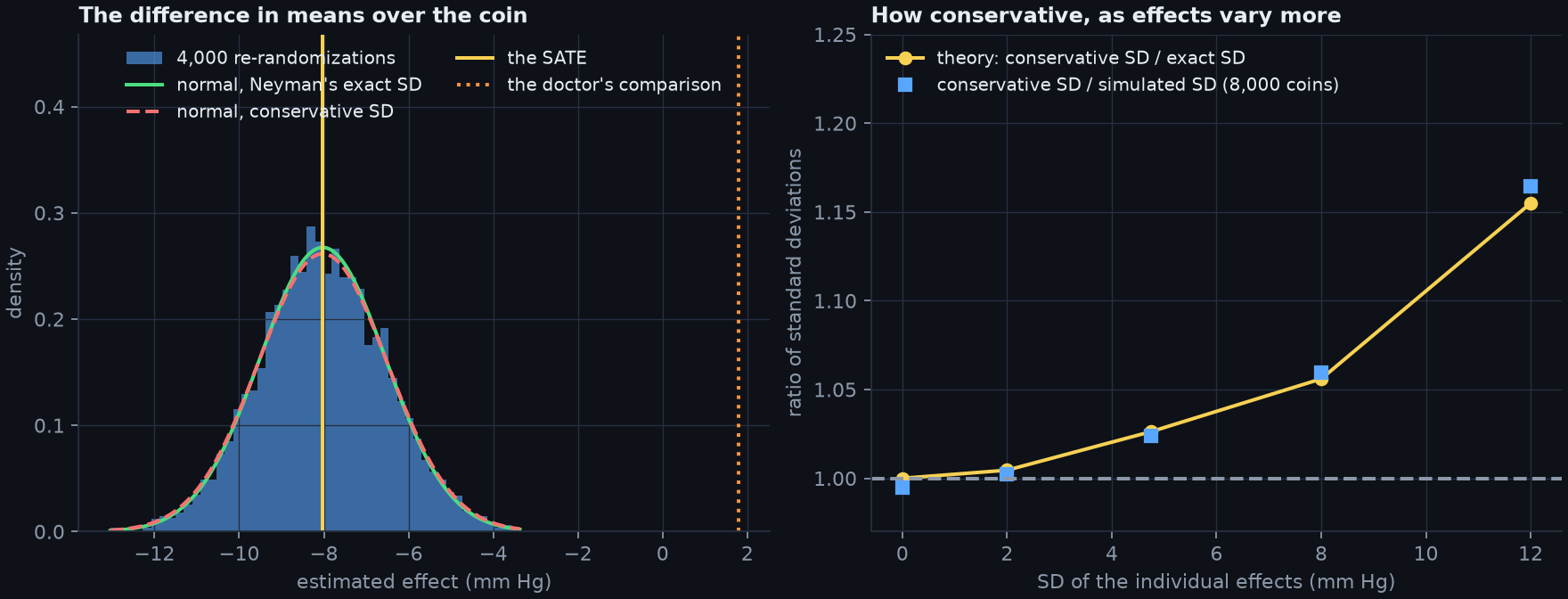 Lab 35 · What If? Experiments and Potential OutcomesOne science table, four thousand coins
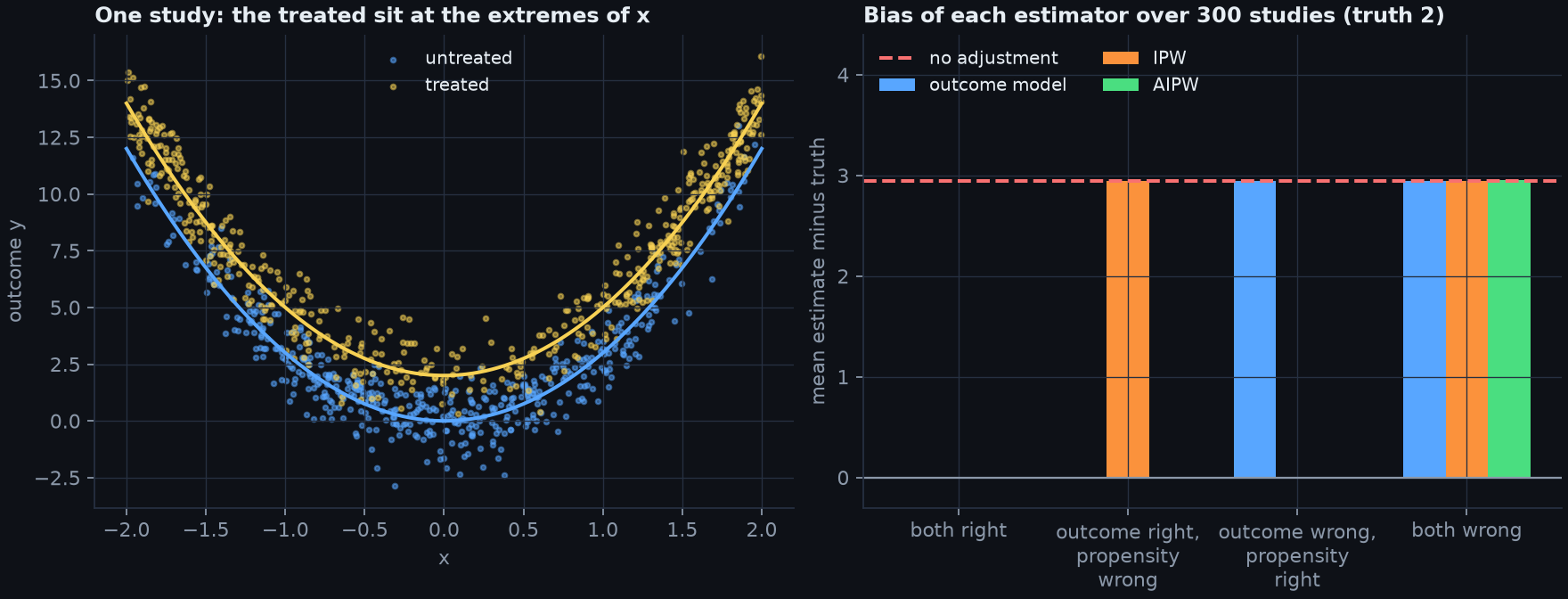 Lab 36 · Causes Without ExperimentsDouble robustness: two chances to be right
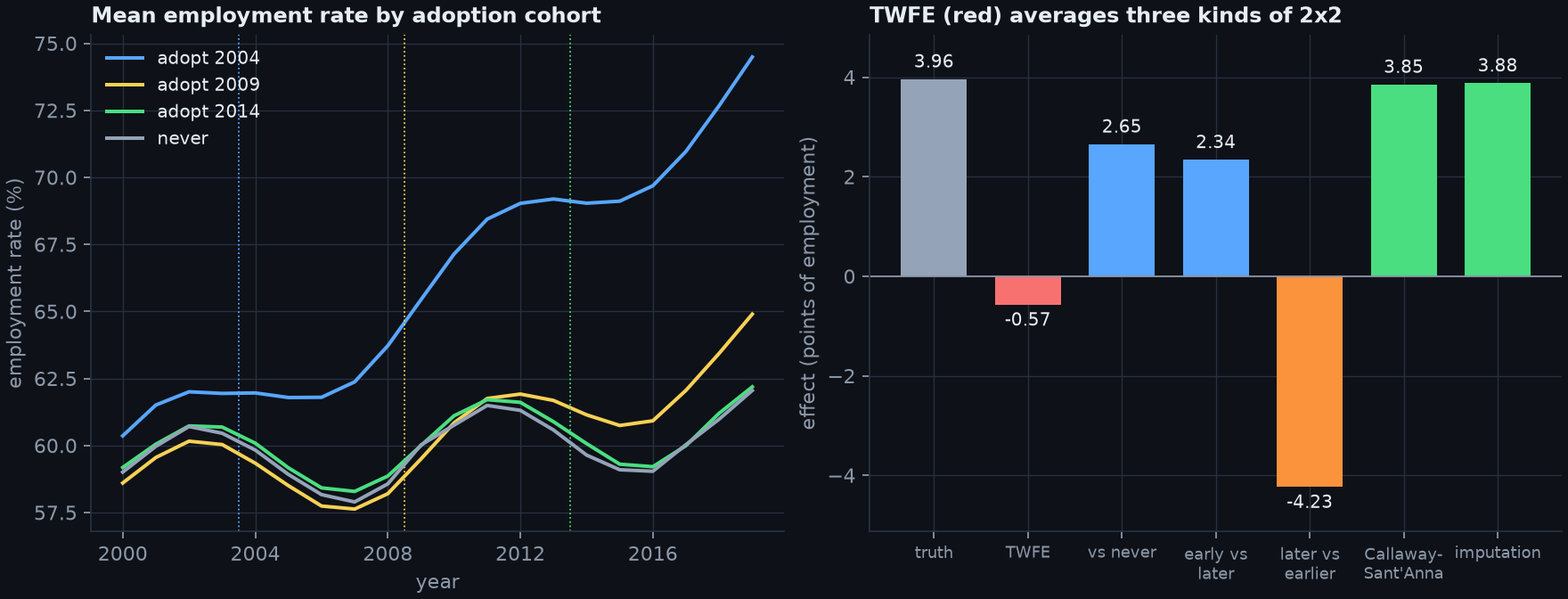 Lab 37 · Natural ExperimentsStaggered adoption: the regression that gets the sign wrong
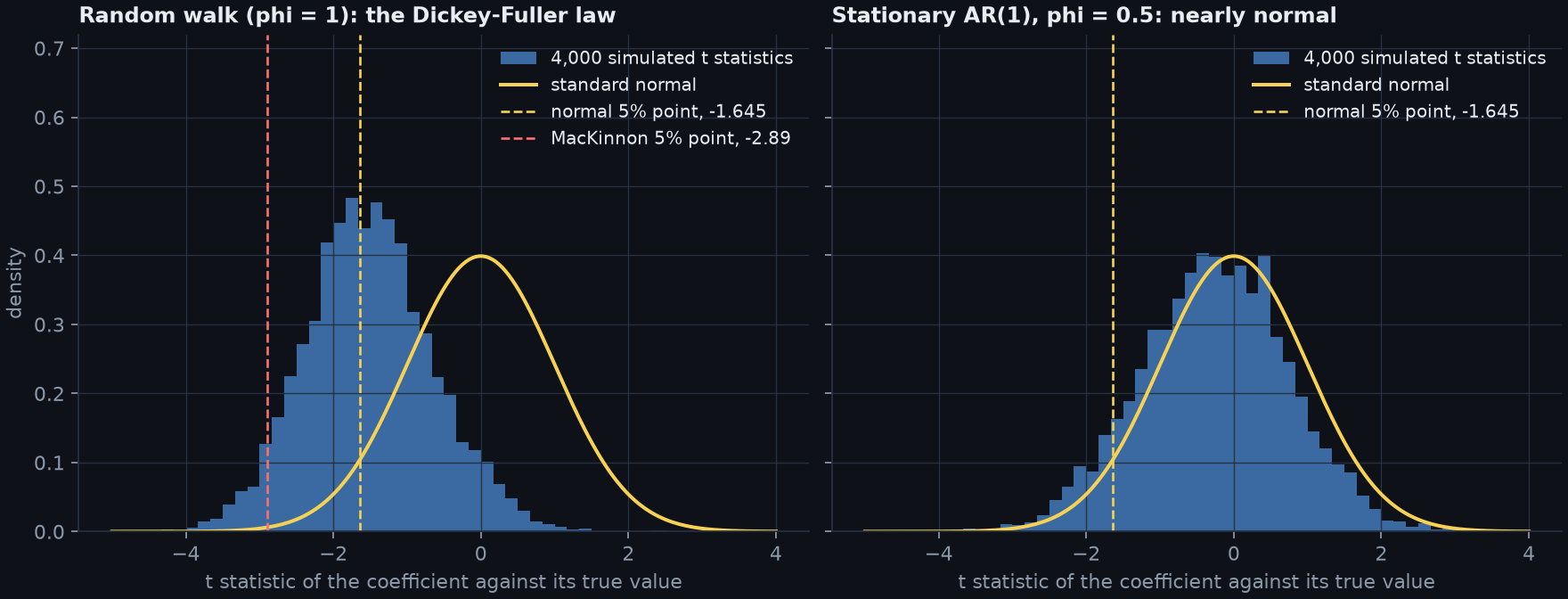 Lab 38 · Time Series in DepthThe unit-root test has its own distribution
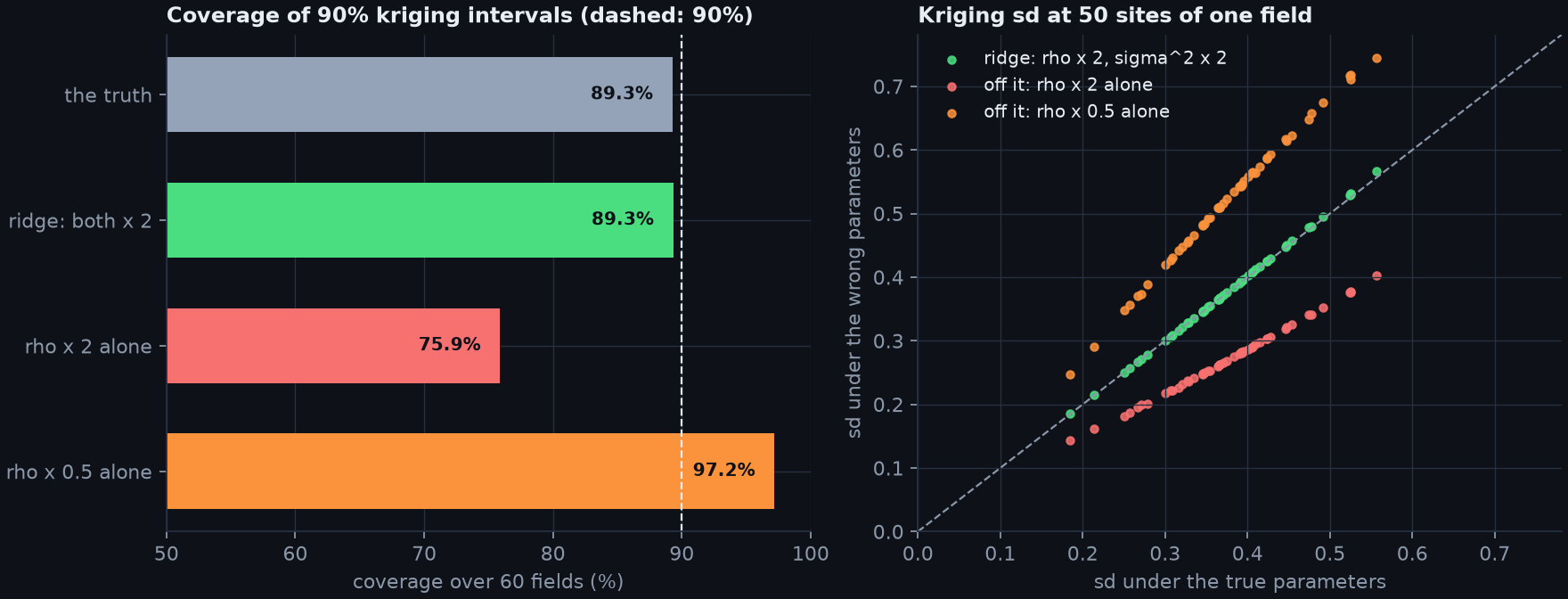 Lab 39 · SpaceKriging along the ridge: what need not be learned
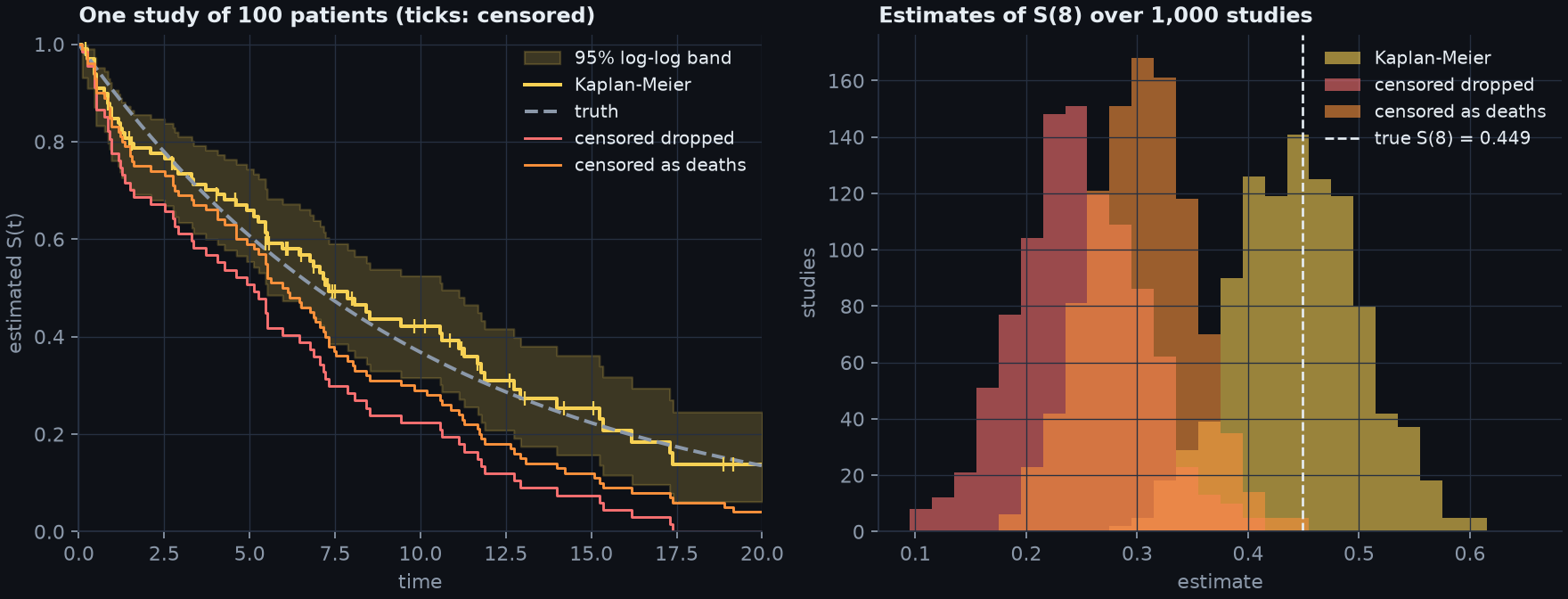 Lab 40 · Time to EventKaplan-Meier against the two easy mistakes
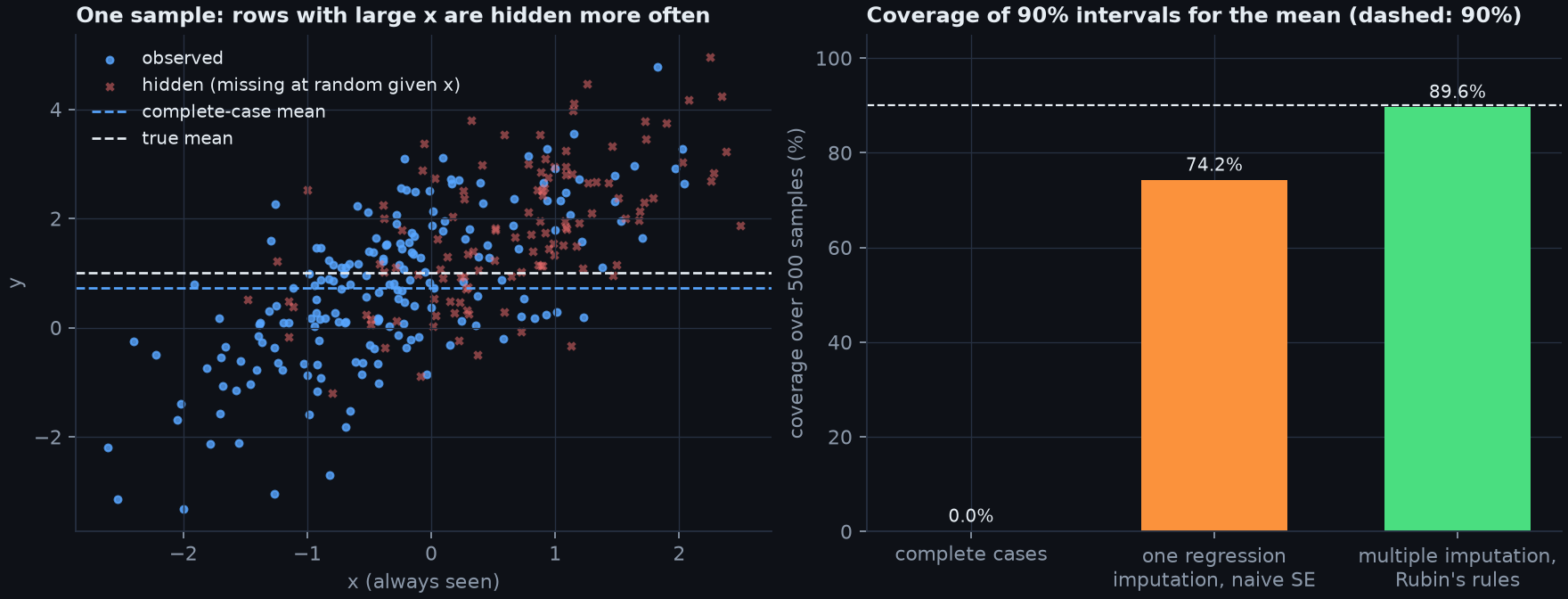 Lab 41 · What You Didn't SeeComplete cases, one imputation, and Rubin's rules
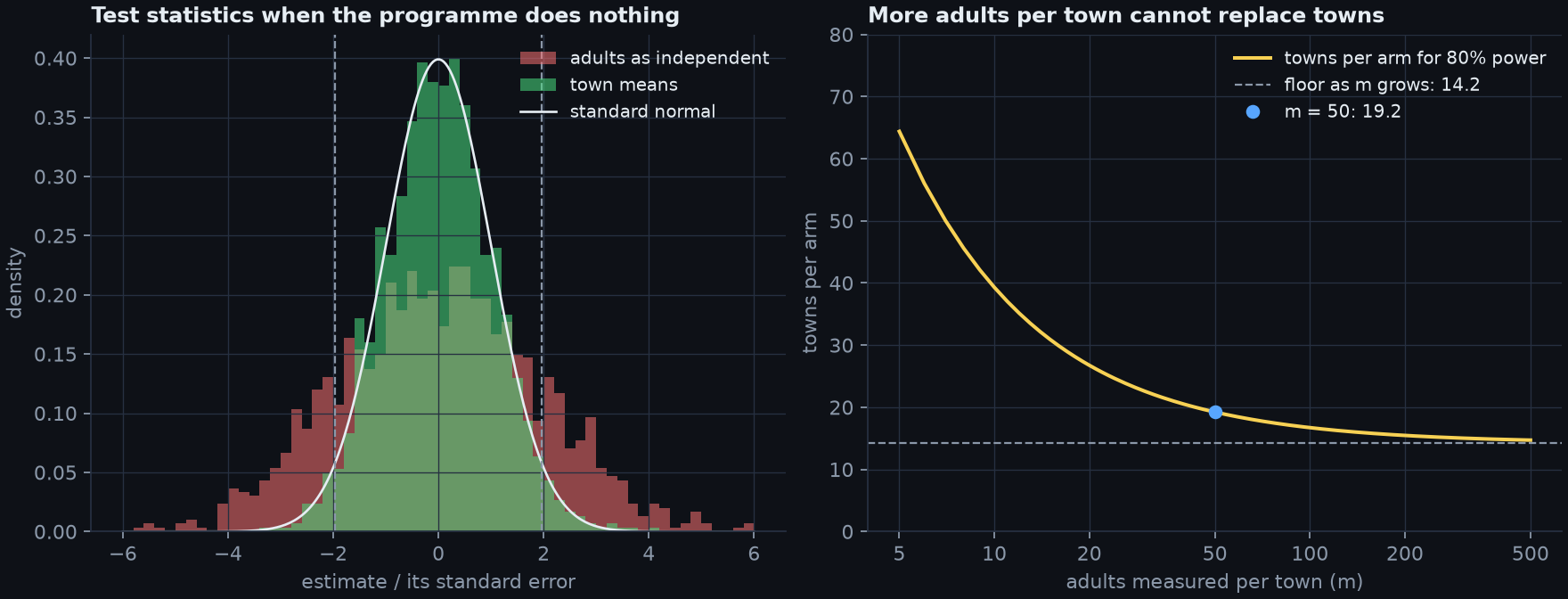 Lab 42 · The Comprehensive ExamA cluster trial analysed two ways
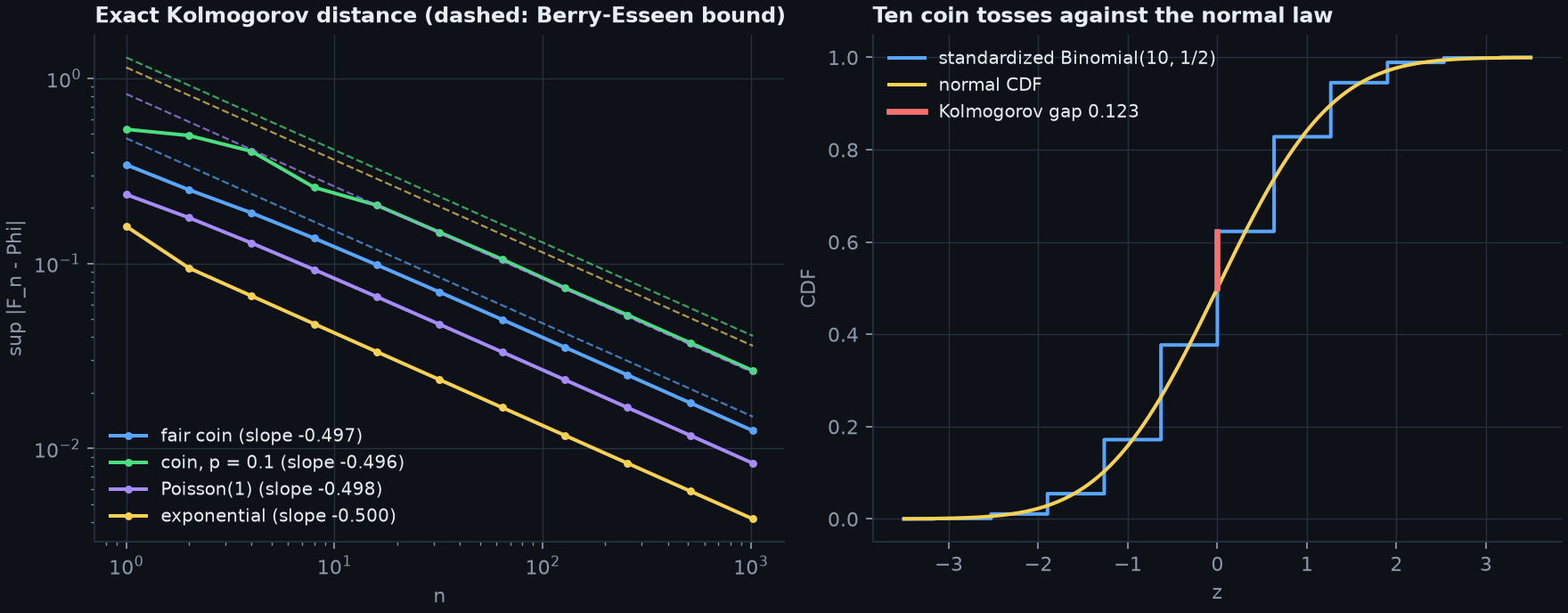 Lab 43 · Measure-Theoretic ProbabilityHow fast is the central limit theorem?
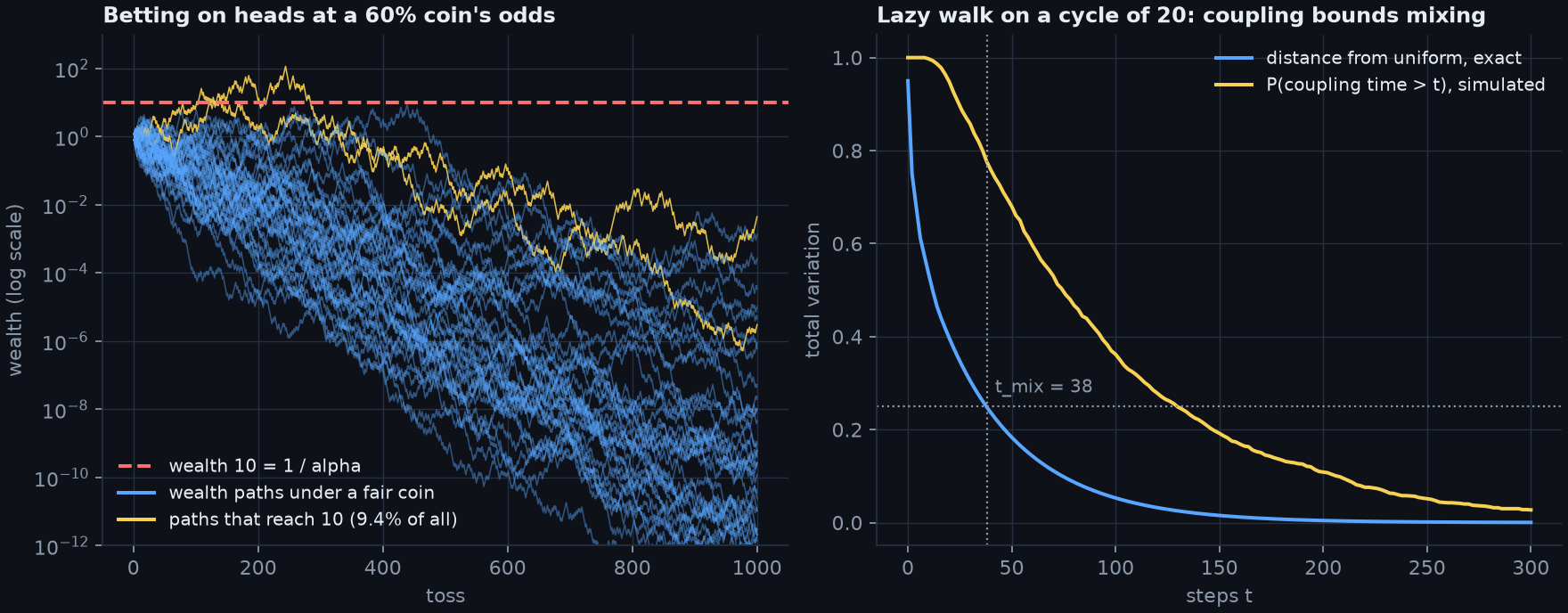 Lab 44 · Martingales, Markov Chains and Brownian MotionFair games in time: Ville's inequality, gambler's ruin and coupling
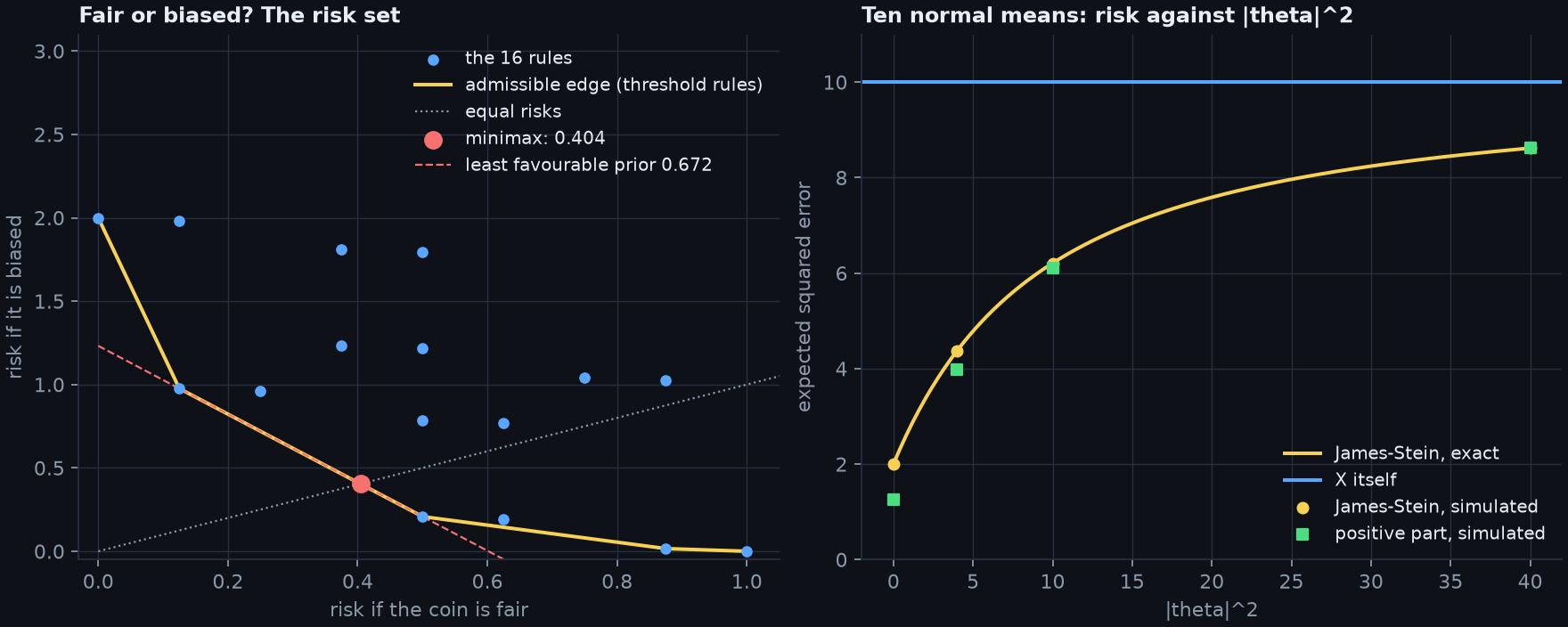 Lab 45 · The Theory of EstimationA risk set, its minimax rule, and Stein's paradox
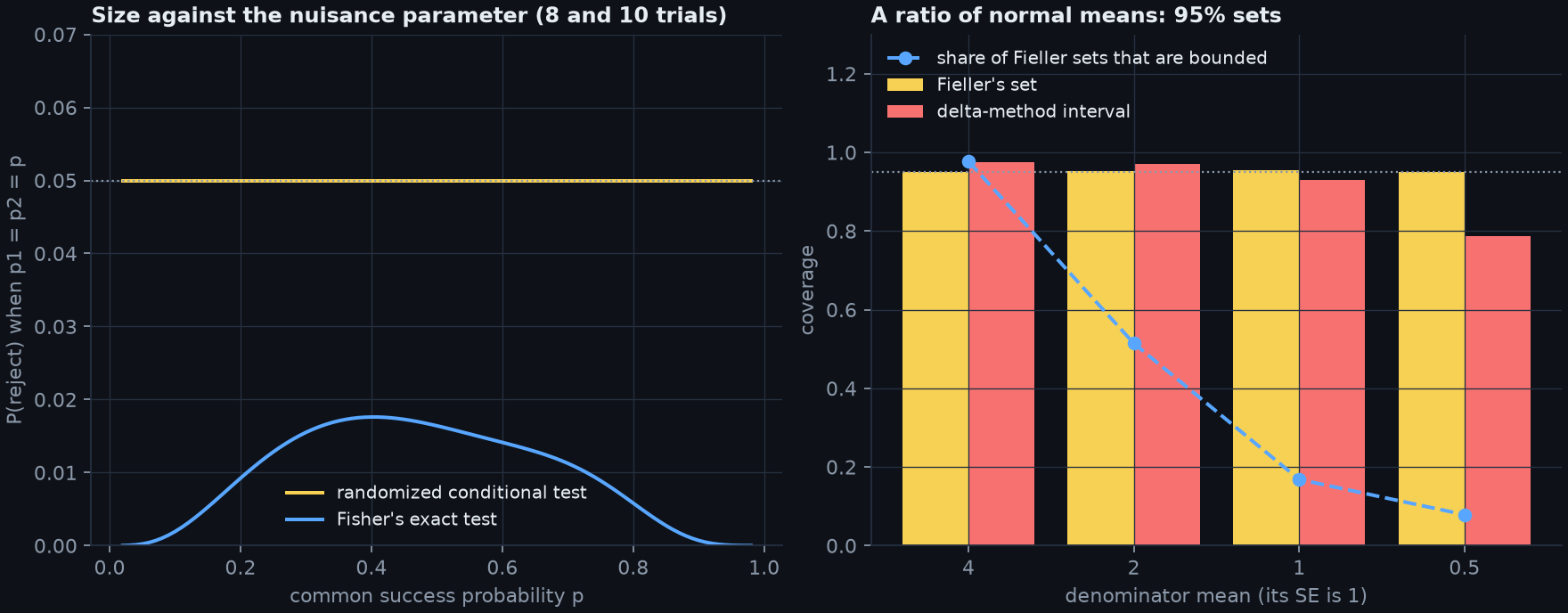 Lab 46 · The Theory of Testing and ConfidenceSimilar tests, unbiased tests, and an interval that must sometimes be infinite
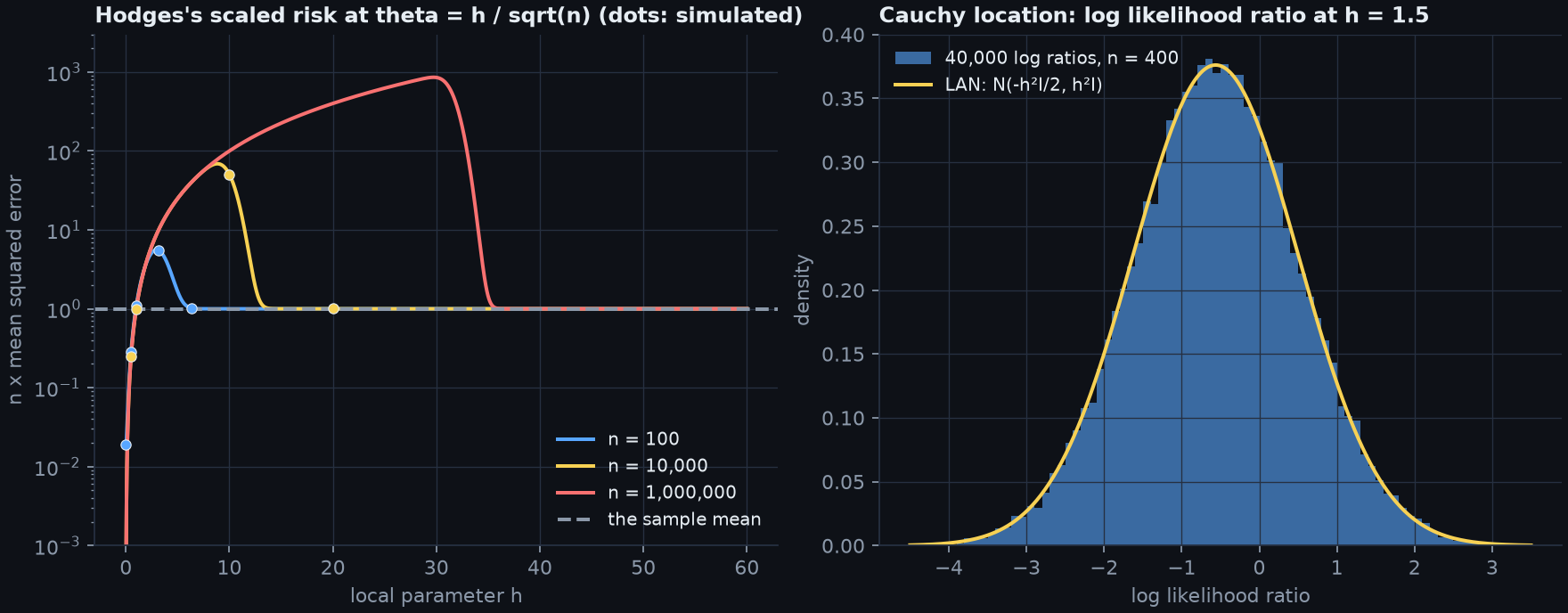 Lab 47 · Asymptotic StatisticsHodges's bump and local asymptotic normality
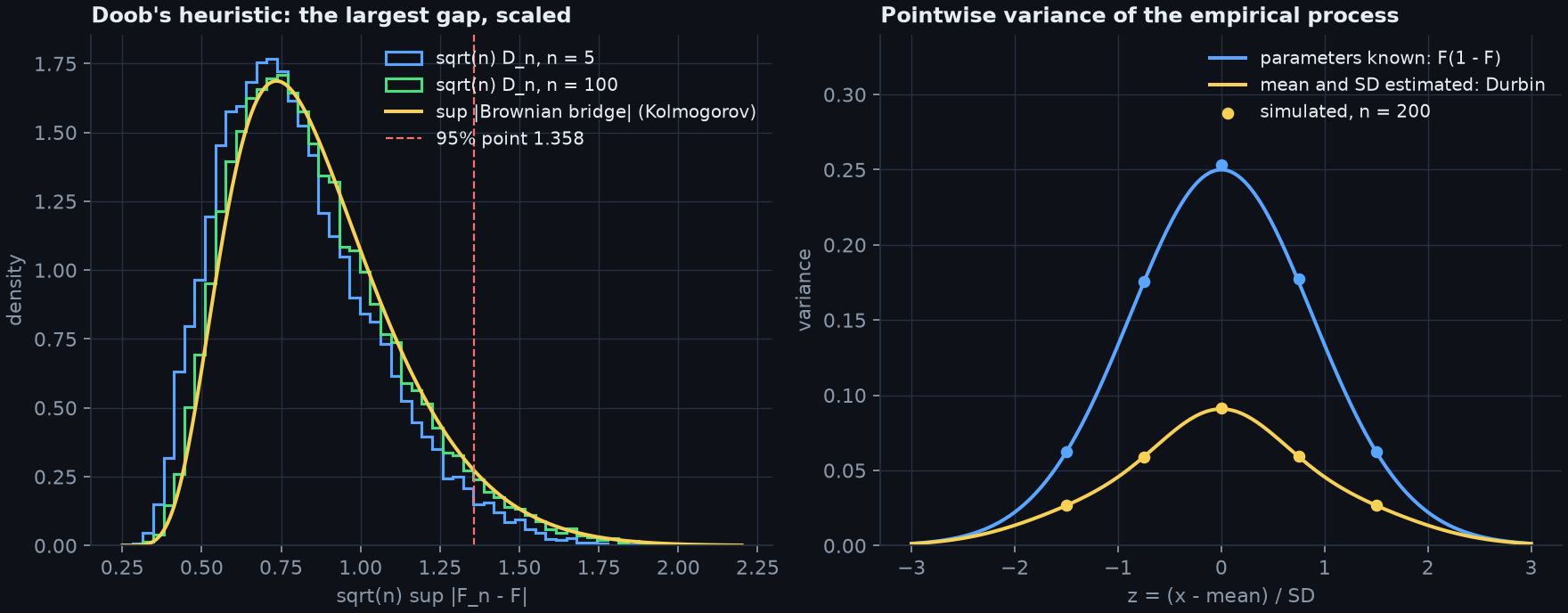 Lab 48 · Empirical ProcessesThe empirical process: Kolmogorov's law, symmetrization, and estimated parameters
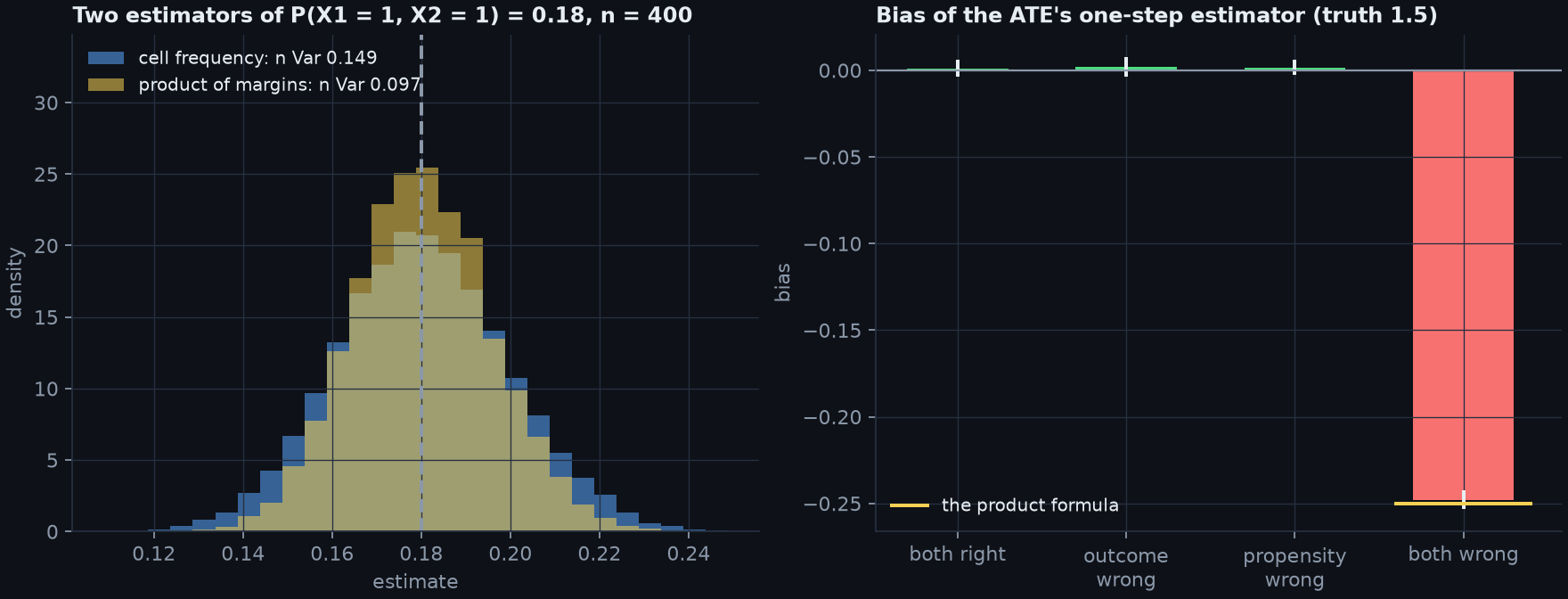 Lab 49 · Semiparametric EfficiencyThe efficient influence function as a projection, and double robustness as a product
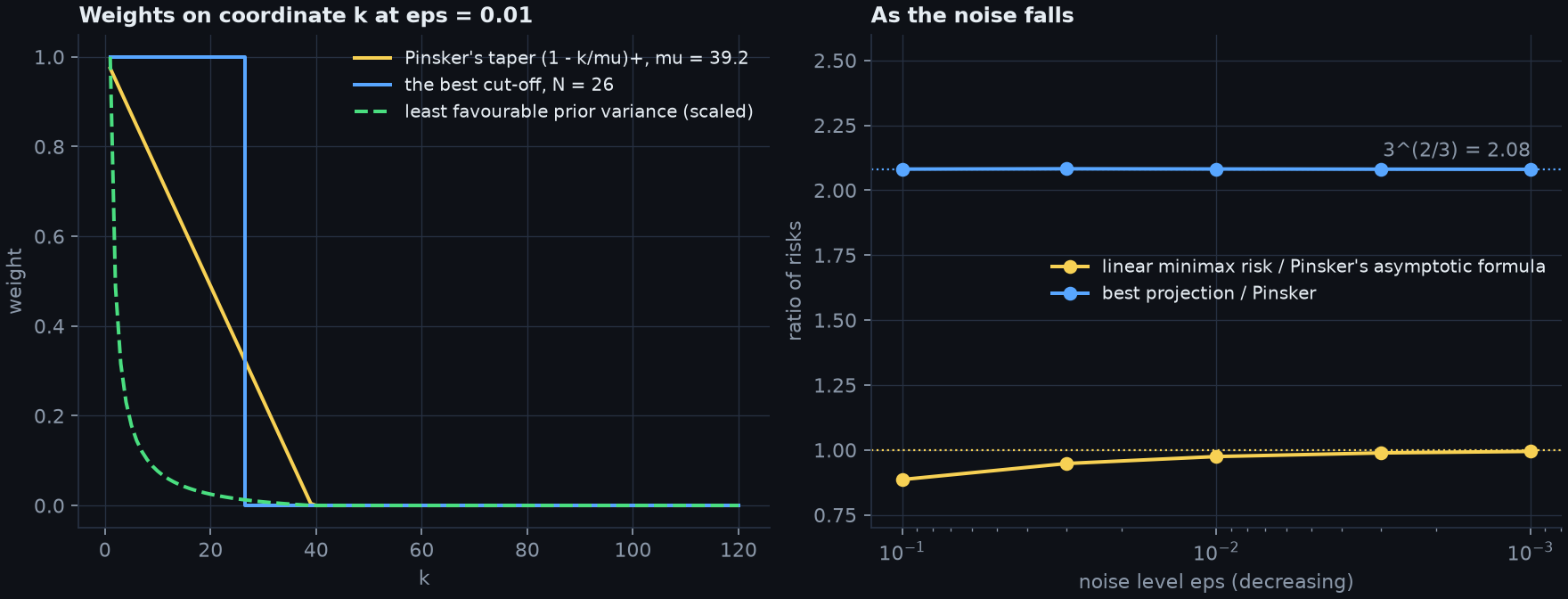 Lab 50 · Minimax Theory: the Limits of EstimationPinsker's theorem in the Gaussian sequence model
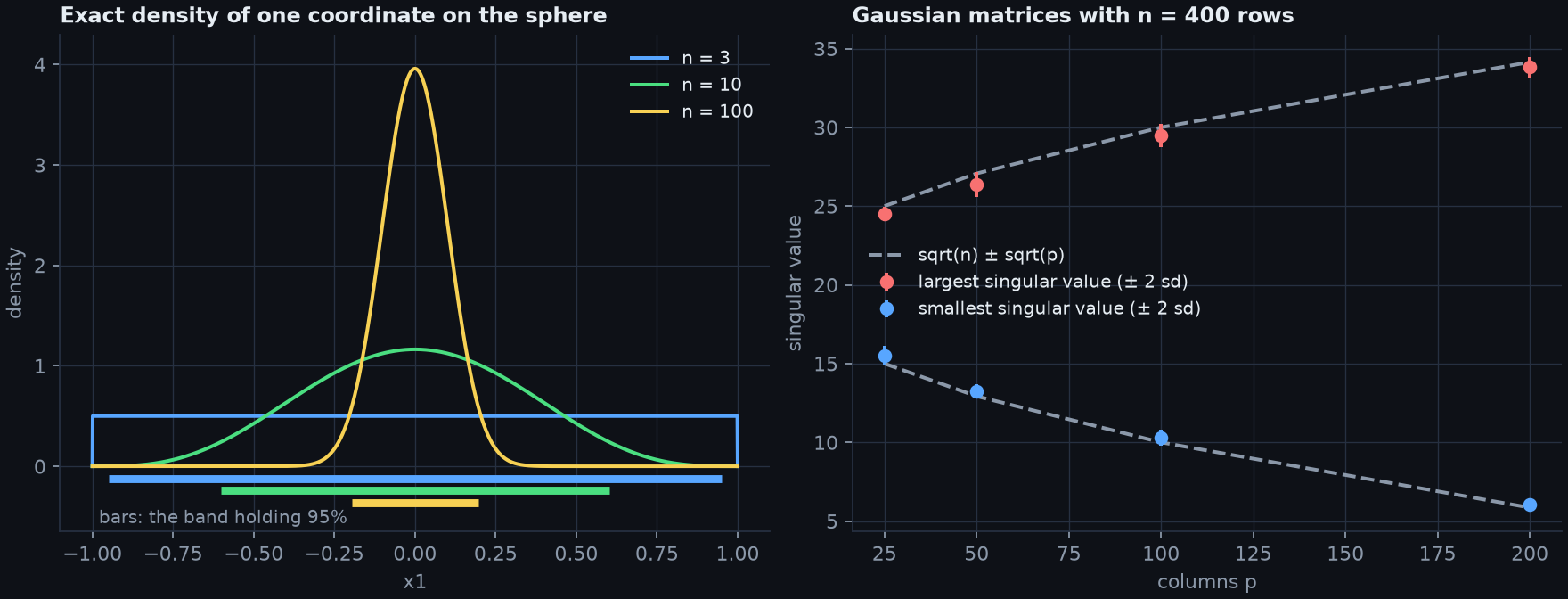 Lab 51 · High-Dimensional ProbabilityConcentration in high dimensions: the equator, the shell, and root n plus or minus root p
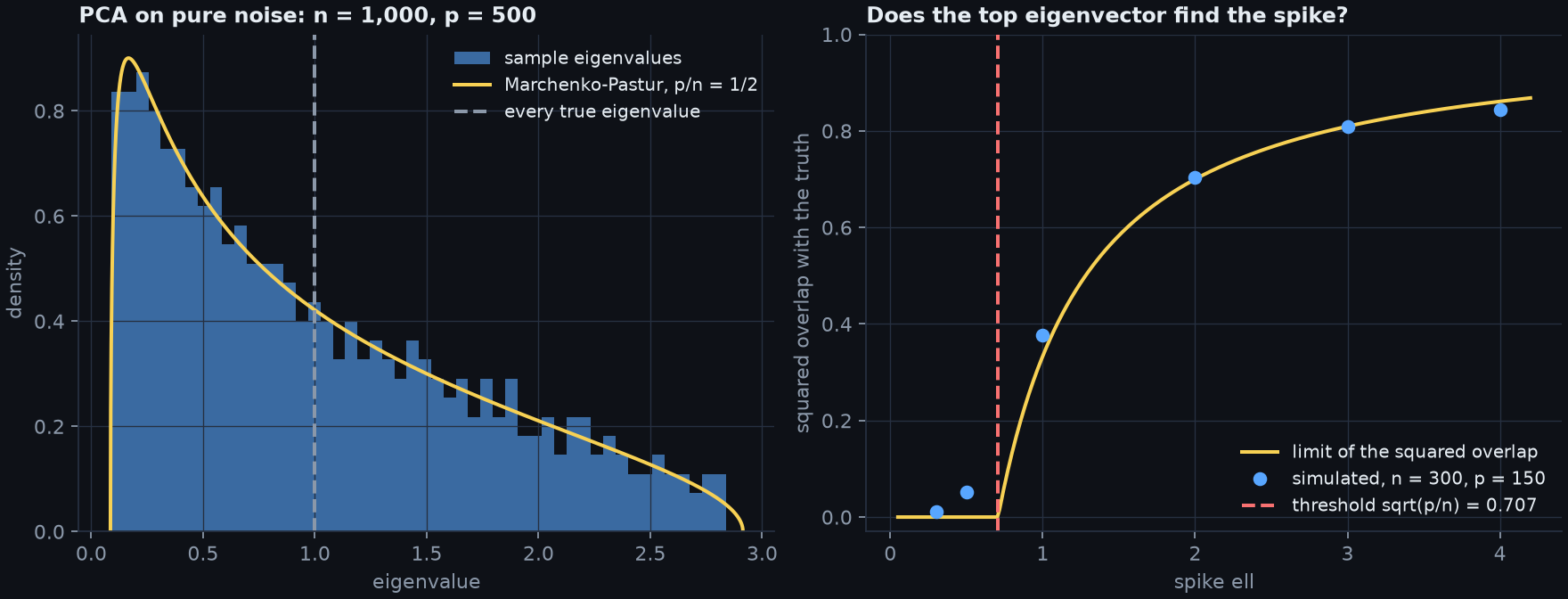 Lab 52 · High-Dimensional StatisticsThe bulk, its edges, and the spike that PCA can or cannot see
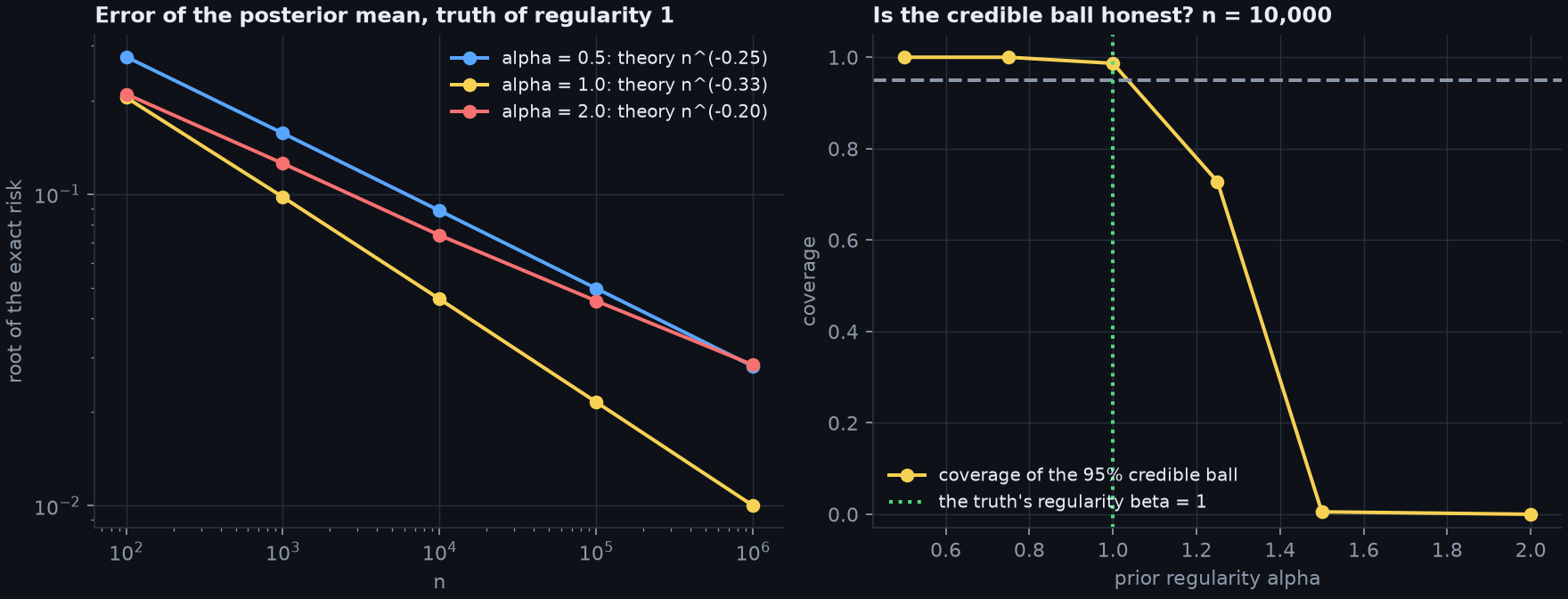 Lab 53 · Bayesian Asymptotics and Nonparametric BayesContraction rates and credible balls in the Gaussian sequence model
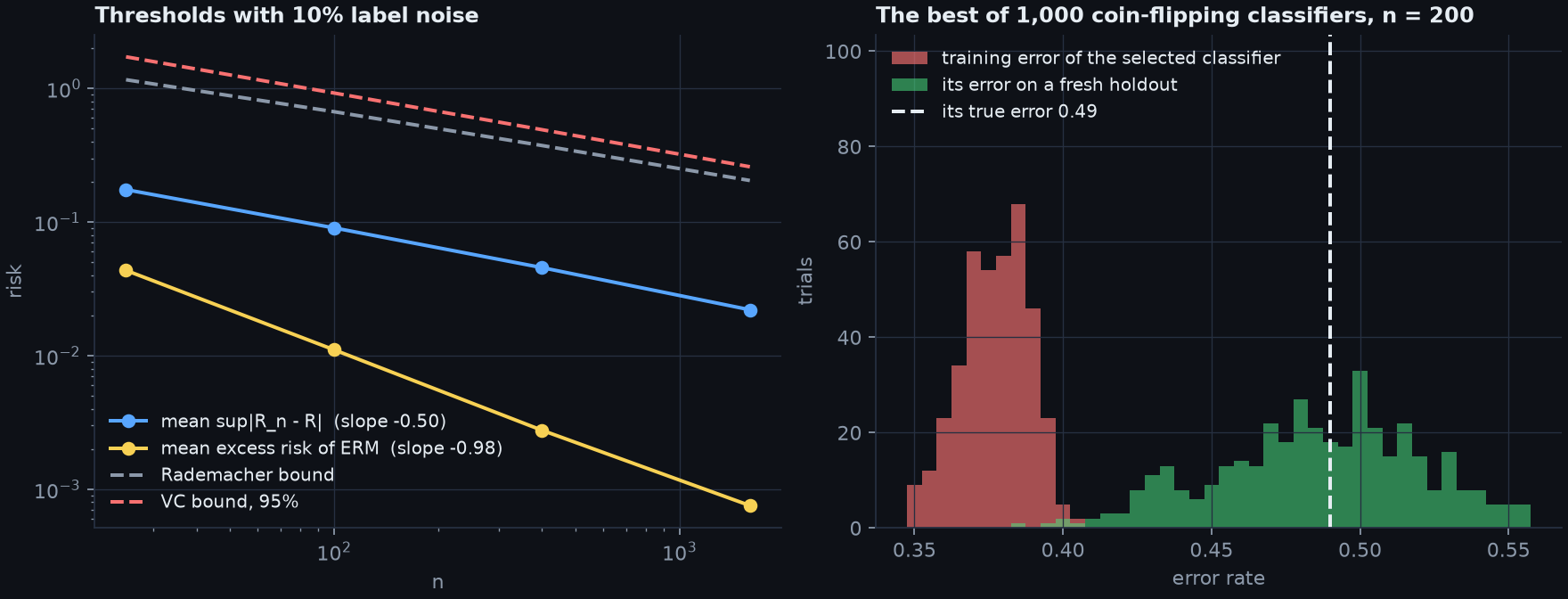 Lab 54 · Statistical Learning TheoryUniform deviations, ERM's excess risk, and the best of a thousand classifiers
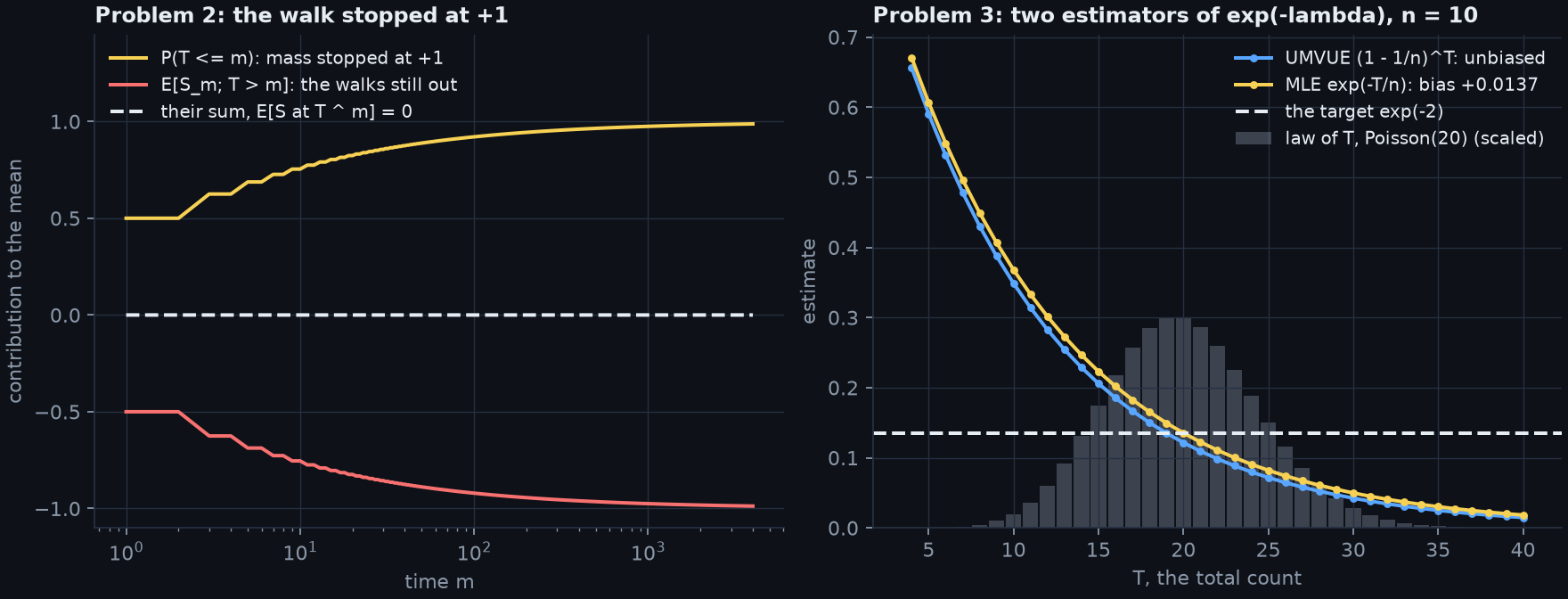 Lab 55 · The Qualifying ExamChecking three qualifying-exam proofs with numbers
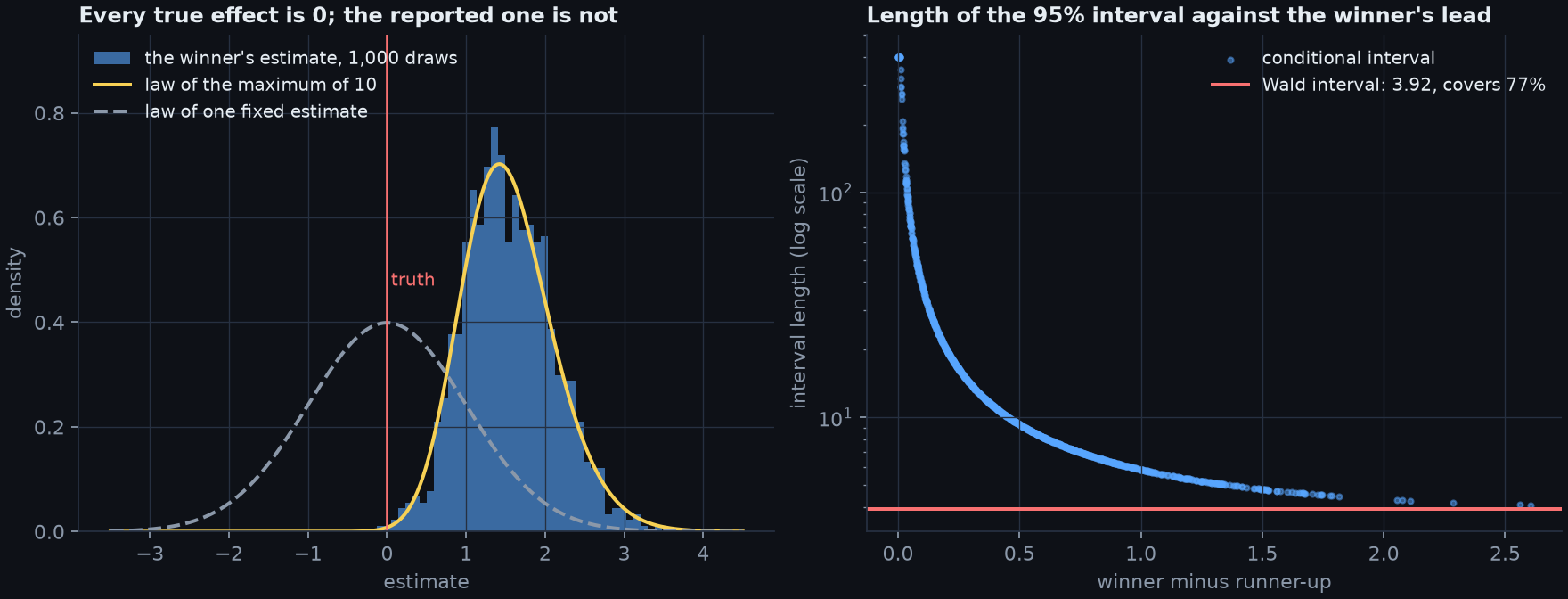 Lab 56 · Inference After SelectionThe winner's curse and the interval that conditions on winning
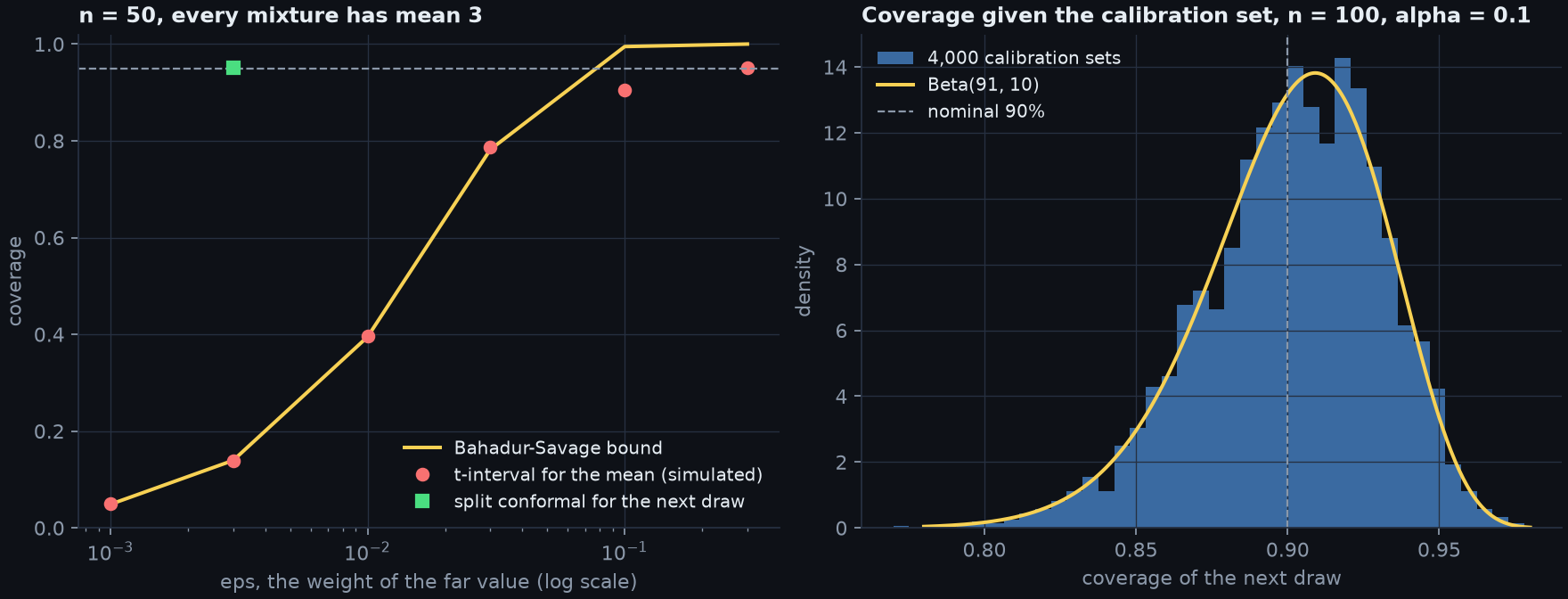 Lab 57 · Distribution-Free InferenceNo interval for the mean, an exact one for the next draw
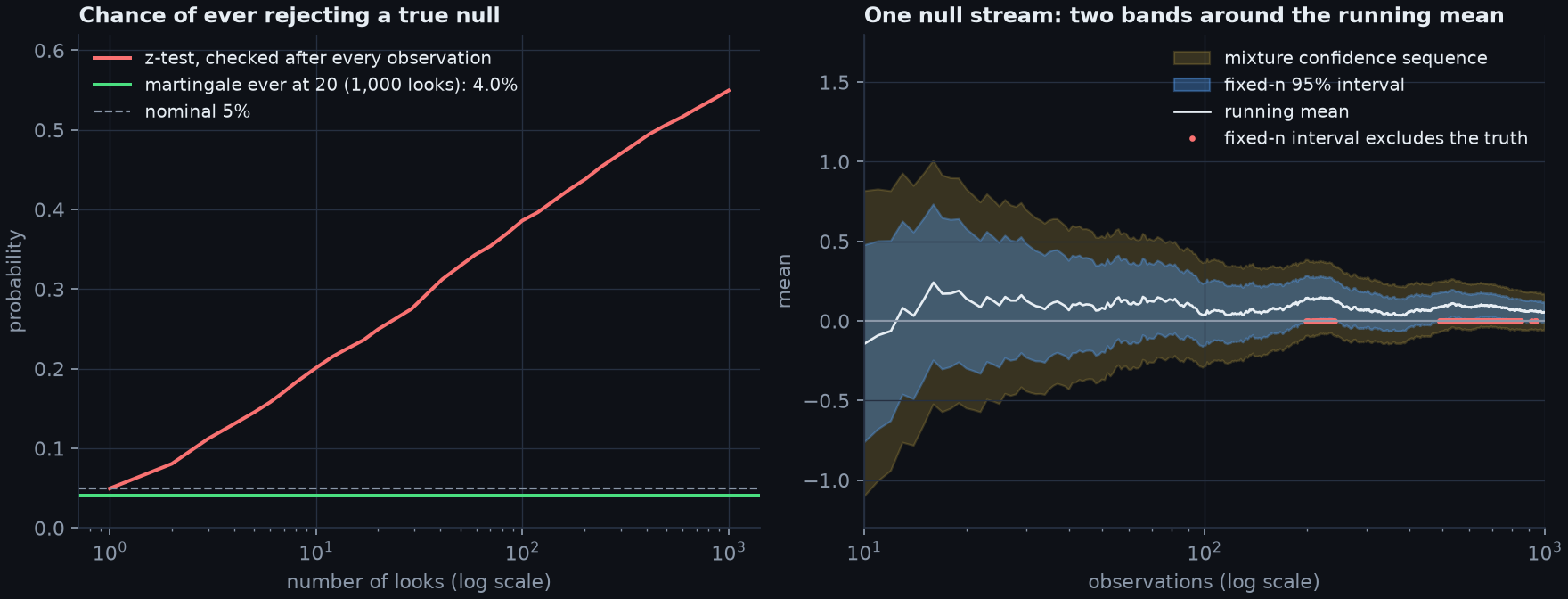 Lab 58 · Anytime-Valid Inference and Adaptive ExperimentsPeeking, Ville's inequality and the SPRT
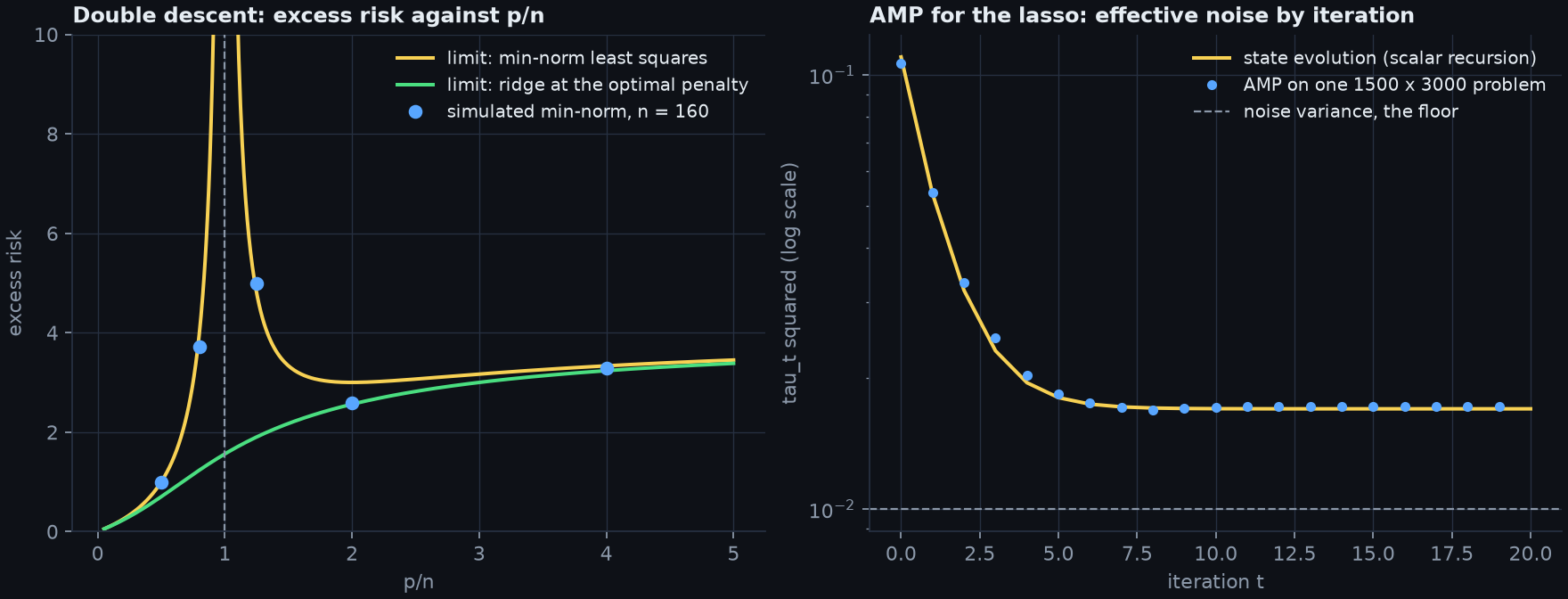 Lab 59 · High-Dimensional AsymptoticsDouble descent and state evolution, theory against simulation
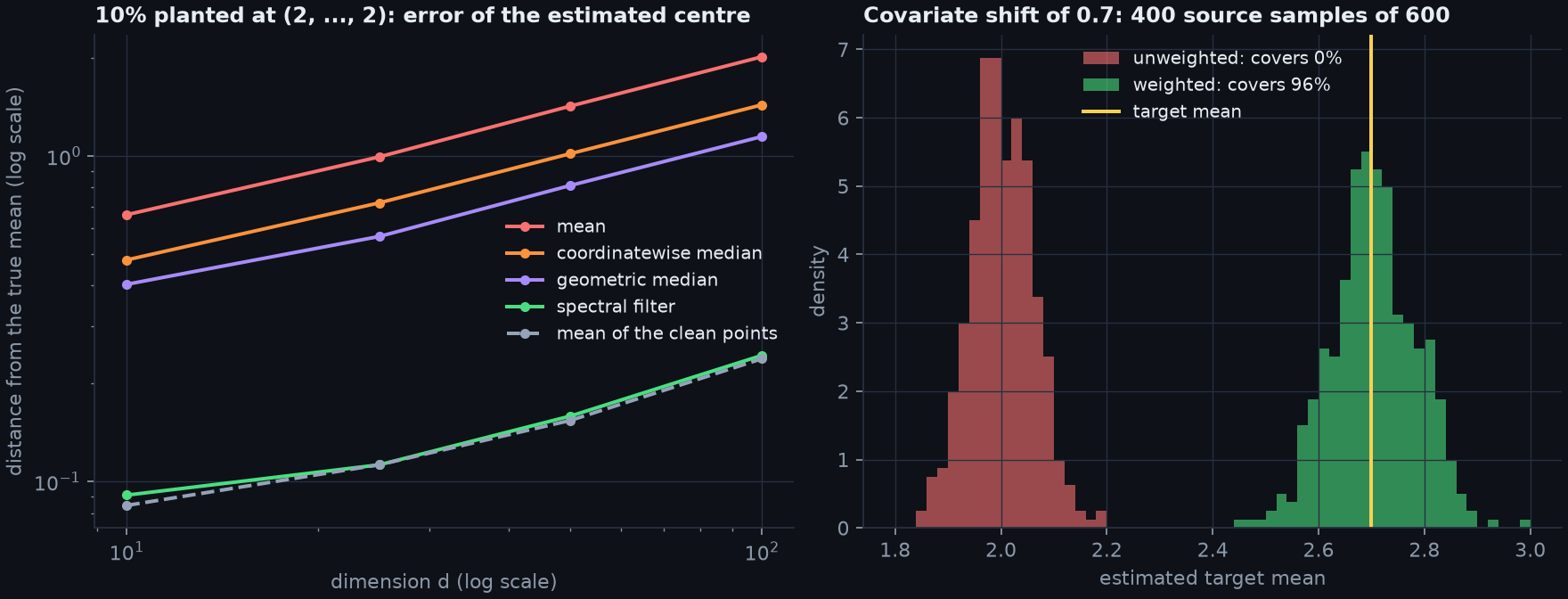 Lab 60 · Robustness and Distribution ShiftA planted cluster, and a shifted population
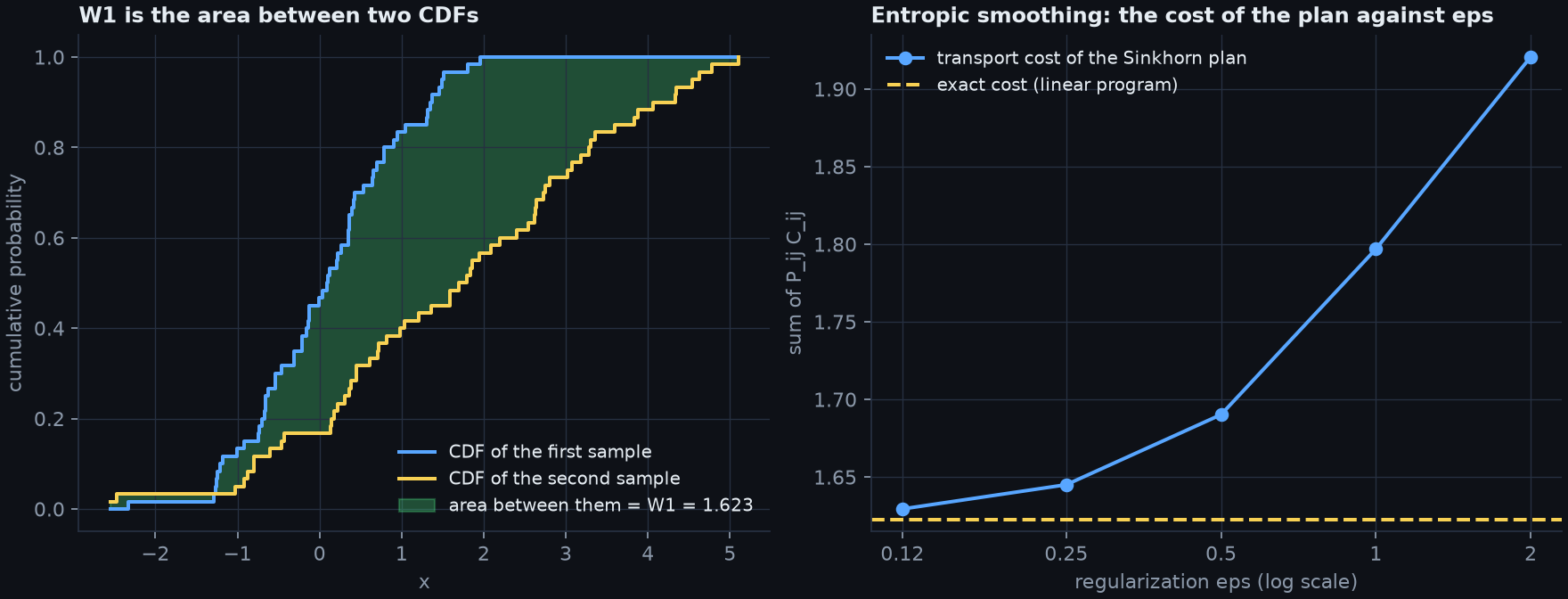 Lab 61 · Optimal Transport in StatisticsTransport on a line: quantiles, areas, a linear program and Sinkhorn
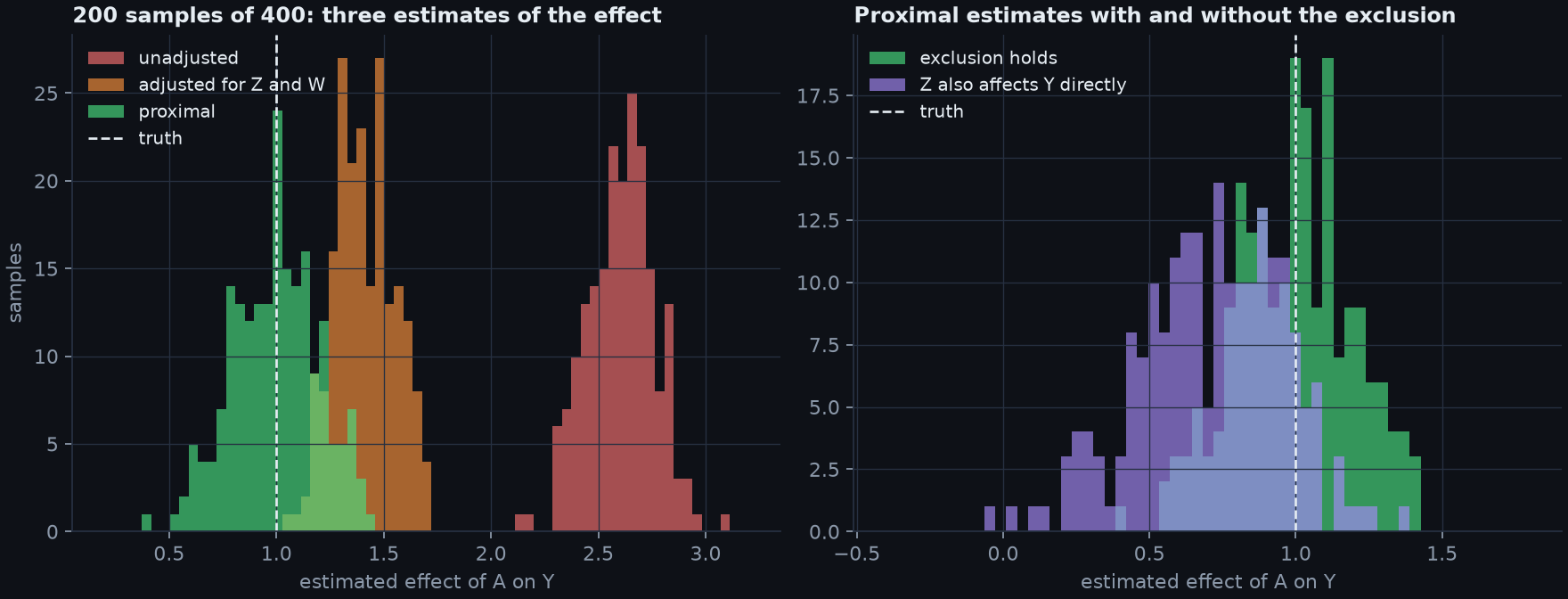 Lab 62 · Frontiers of Causal InferenceProximal inference: two proxies in place of a hidden confounder
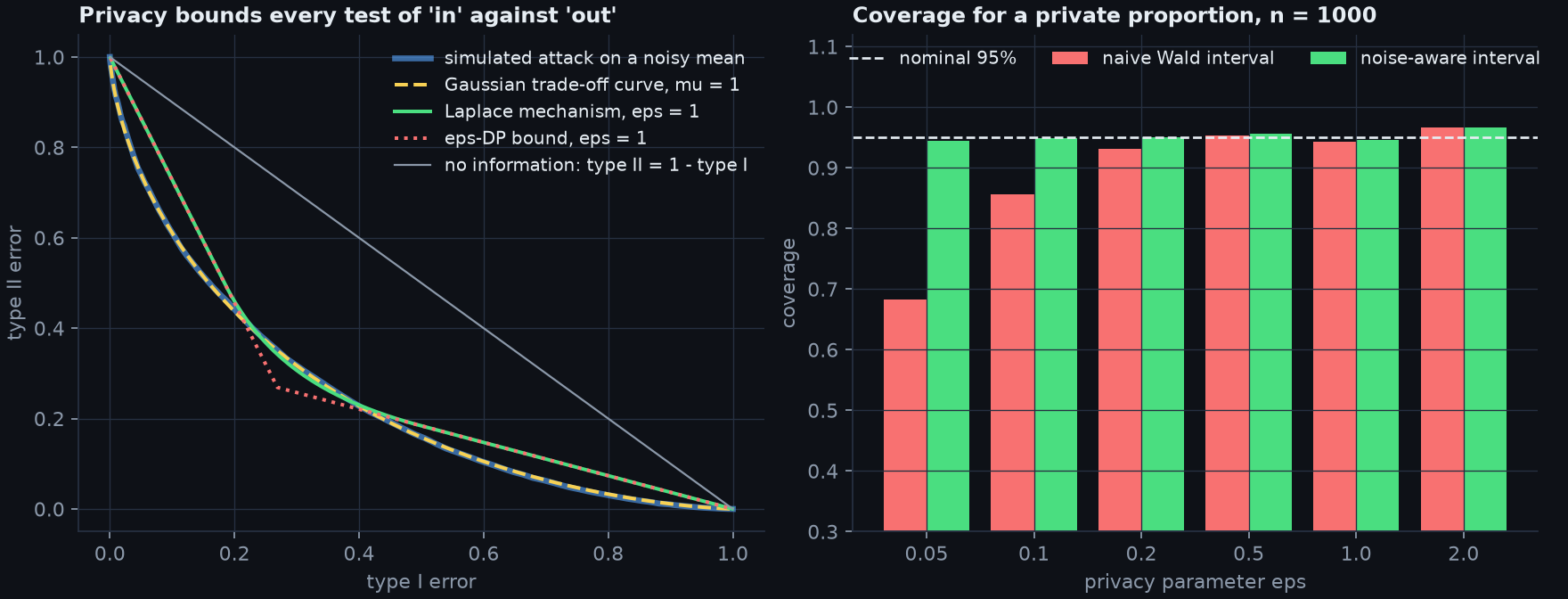 Lab 63 · Privacy and FairnessPrivacy as a test, and its cost in coverage
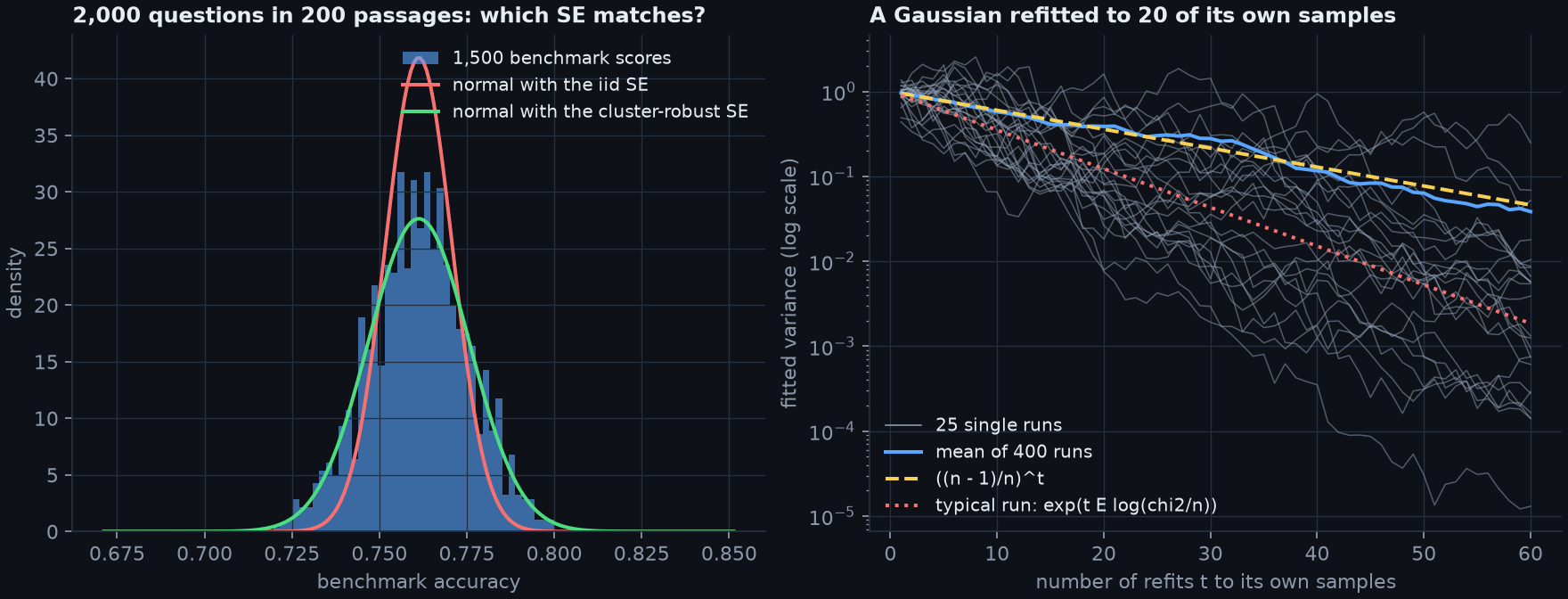 Lab 64 · Statistics in the Age of AIBenchmarks are samples; a model fed its own output forgets
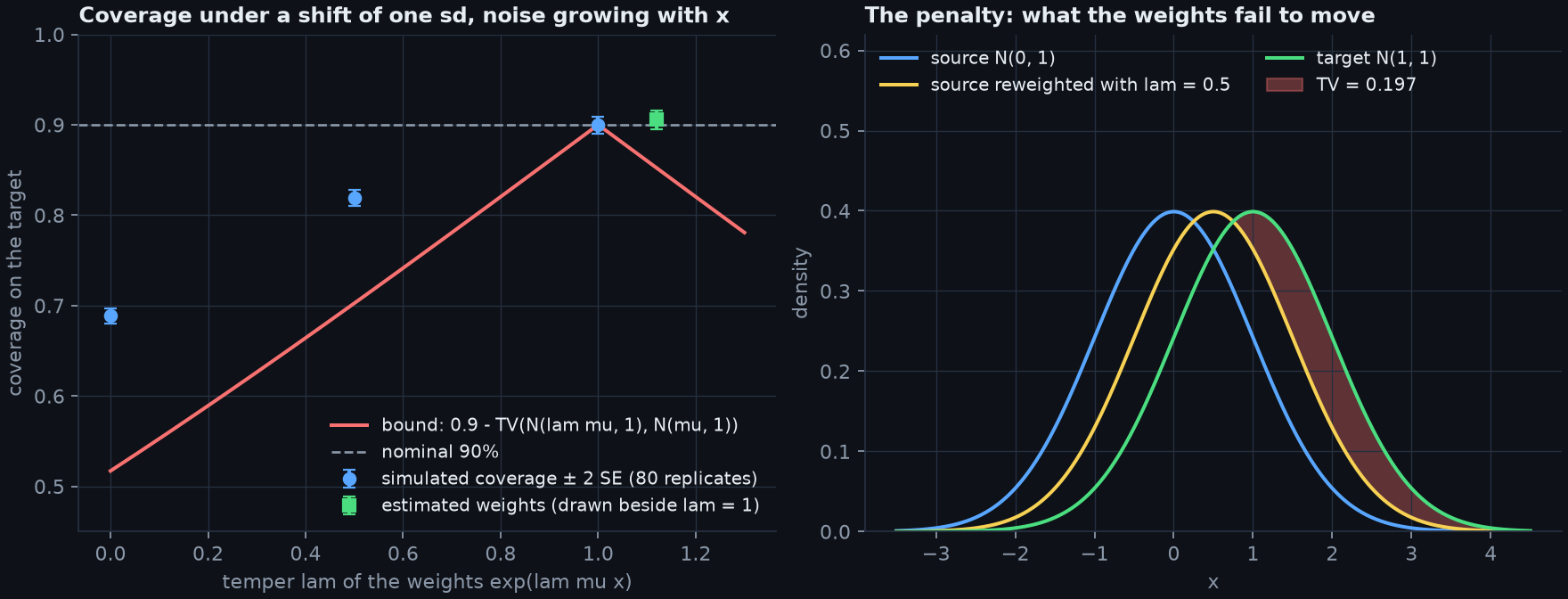 Lab 65 · The DissertationWeighted conformal under shift: coverage against the total-variation bound